The Remedy Room · The Congressional Record
Congressional Voices
This is not a political argument. Set the party labels down — you'll need both hands for the evidence.
A Civil Rights Question — Weigh the Evidence
Has the insurance appeal become a prosecution's court against the patient — a tribunal a sick person must win just to receive the care their own doctor already ordered?
Do a corporation's "coverage decisions" truly remain mere policy judgments — or are they clinical decisions, made without a license and without liability?
What does it mean that those judgments are overturned on appeal more than 8 out of 10 times — every year — while only about 1 in 9 denials is ever appealed at all? A tribunal that is almost never convened, and that reverses itself when it is, is not judging. It is obstructing. ★
And what does it mean when the denial and the delay carry measurable, documented human harm — hospitalization, permanent impairment, death?
★ A Note on the Numbers in Question 3
What the figure is. Medicare Advantage prior authorization determinations, as reported by plans to CMS: 80.7% of appealed denials overturned in 2024, more than eight in ten in every year from 2019 through 2024, and only 11.5% of denials appealed at all. UnitedHealthcare’s own overturn rate was 85.2% in 2023 and 79.1% in 2024. Denial and overturn rates differ by market and by appeal stage — these are Medicare Advantage prior authorization numbers, not a figure for all insurance denials. KFF, analysis of CMS data ↗
This number should fall — and it has. A 2024 CMS rule required insurers to publicly post their own prior authorization metrics, first due March 31, 2026, covering calendar year 2025. In that first release, appealed denials were overturned 67% of the time in Medicare Advantage, 47% in Medicaid managed care, and 43% in the ACA Marketplace. AbilityForge counts that as the point rather than a correction: the rules changed and the number moved the right way. Accountability works — which is the argument for more of it, not less. KFF, 2025 prior authorization metrics ↗
One caveat, stated because it matters. The 2025 figures are self-reported by insurers, and the rule requires percentages — not counts. No numerator, no denominator, no standardized reporting template. The improvement is real as reported, and “as reported” is carrying weight in that sentence. Requiring the underlying counts is the obvious next step; KFF names the same gap.
Every study, filing and PDF behind these numbers — plus an interactive breakdown of denial rates by insurer — is in the Problem Room: Denial Rates — What the Data Shows →
Answer those four honestly and the frame changes underneath you. This stops being left versus right and becomes a question of due process — whether Americans still have fair access to medically necessary care, or whether that access has been quietly moved behind a court built for them to lose.
The members below are not a political roster. They are the record — of who is asking these questions inside the building, of what the answers are turning out to be, and what Documented Pushback looks like.
The Cross-Spectrum Convergence
A Republican urologic surgeon says prior authorizationPrior AuthorizationA health-insurance process that requires your doctor to get advance approval from your plan before it will cover a specific service, procedure, or drug. is the practice of medicine and insurers should pay malpractice insurance. A second Republican urologic surgeon says he needed eight attempts to get his own prescription and calls for breaking up the industry entirely. A conservative senator co-authors the breakup bill with a progressive Democrat. That Democrat gets the CVS CEO on record defending a structure the FTC documented as harmful. And a former Republican congressman-podiatrist retires after 12 years, immediately launches a bipartisan advocacy coalition, and writes in The Hill that he has been asking the malpractice accountability question for 30 years.
None of these members or former members coordinated their statements. They arrived here from their own clinical experience, their own constituents, and their own reading of the evidence. That is the signal. Note: Brad Wenstrup is a former member — he retired in 2025 and now advocates post-Congress. He is not a sitting legislator.
Physician-Legislators
Doctors in Congress — a denial is the practice of medicine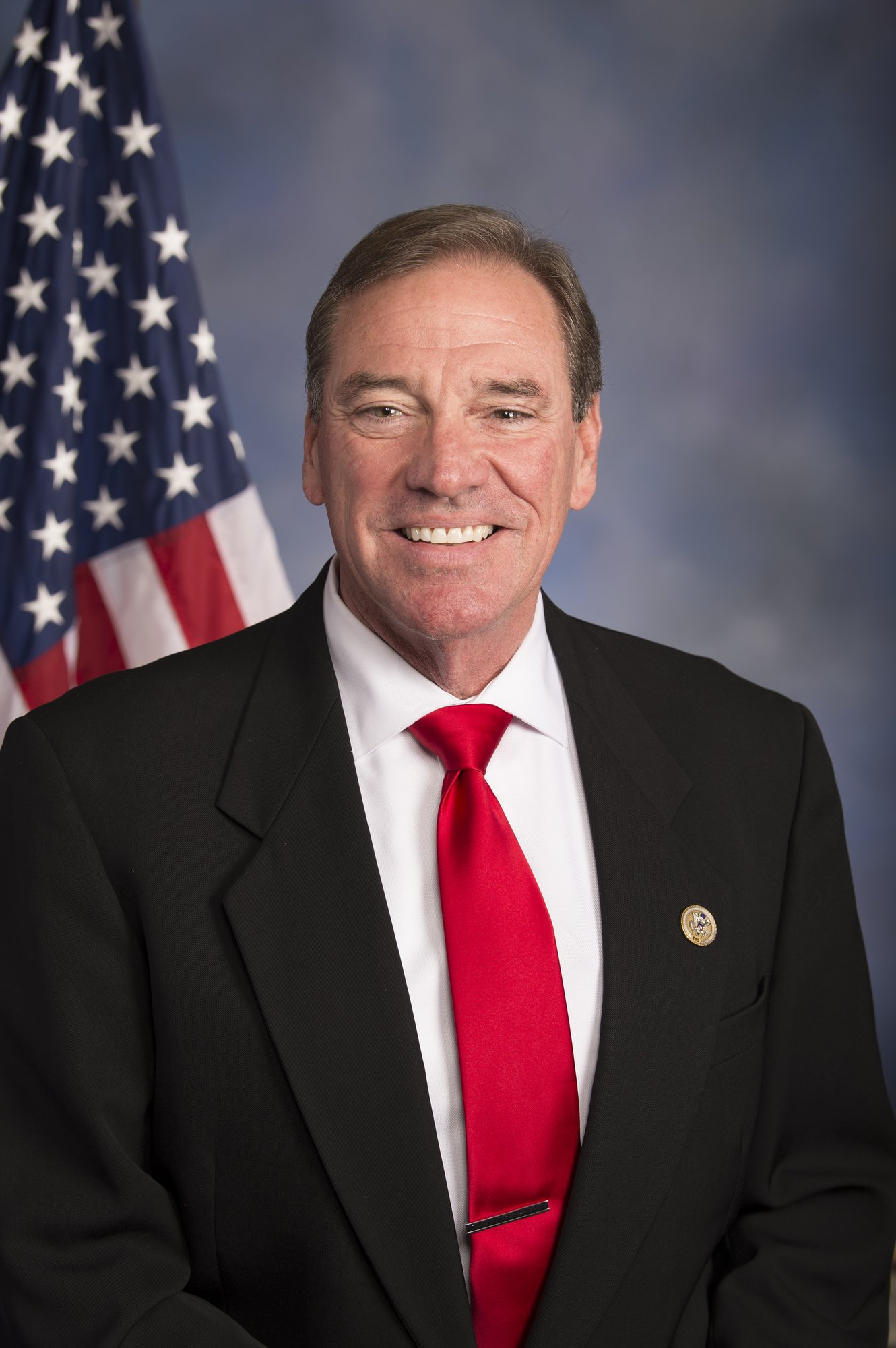
Rep. Neal Dunn, MD (R-FL)
Prior Authorization Is the Practice of Medicine
A urologic surgeon in Congress states directly: prior authorization is the practice of medicine, and insurance companies should pay malpractice insurance just like physicians do. The legal foundation of Clinical Integrity Amendment § 5 — from the House floor.
"Prior authorization, whether on the part of an insurance company or whatever, is the practice of medicine. And I would invite them into the medical liability arena. You and I have to pay med-mal insurance, so should they."
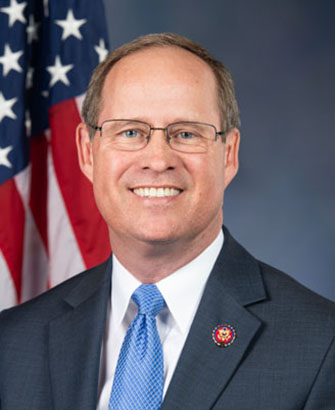
Rep. Greg Murphy, MD (R-NC)
Eight Attempts & Break Them Up — Jan 22, 2026
A Republican physician-congressman needed eight attempts through CVS PBM to get his own medication — then told the insurance executives in the room to their faces that vertical integration has destroyed healthcare competition and they need to be broken up. 77K likes, 24K shares.
"It took me eight times through CVS to get that medication. I'm a physician and member of Congress. I didn't pull any strings. I did what I was supposed to do. Imagine the average person in the country."
The Bill Authors
The structural remedies — already drafted
Sen. Josh Hawley (R-MO)
S.3822 Co-Author — Break Up Big Medicine Act
Republican co-author of the Break Up Big Medicine Act alongside Sen. Elizabeth Warren — the most unusual bipartisan alliance on healthcare in recent Senate history. When a progressive Democrat and a conservative Republican write the same structural reform bill, the problem has escaped partisan framing.
"Health insurance companies are buying up PBMs, pharmacies, doctors' practices, and — in some cases — even hospitals. They're killing competition and making healthcare unaffordable. It's time to put patients first."

Sen. Elizabeth Warren (D-MA)
S.3829 Lead Author · S.3822 Co-Author — Both Reform Tracks
The singular legislative architect connecting both reform tracks simultaneously. S.3829 criminalizes executive conduct such as Private Equity Looting. S.3822 structurally separates insurers from providers. Neither alone closes the loop. Warren is building both.
"When private equity gets hold of health care systems, it is literally a matter of life and death."
Rep. Lloyd Doggett (D-TX)
The Saving MEDICARE Act — Introduced July 1, 2026
Other members exposed the Medicare Advantage upcoding fraud in dollars — Grassley's $8.7B, Jayapal's $2.1B. Doggett wrote the bill to end it. As Ranking Member of the Ways & Means Health Subcommittee, he and 44 colleagues introduced the Saving MEDICARE Act to drain the overpayment pool — an estimated $2.5 trillion over the next decade — that funds the whole apparatus. He also wrote directly to UnitedHealth's CEO on Dr. Potter's behalf and co-signed the DOJ letter with AOC.
"Despite their early claims of greater efficiency and lower costs, Medicare Advantage has never saved a penny. It actually costs taxpayers more each year while offering consumers less."
Documented Pushback
What "not a priority" looks like on the record
Former Legislators
Thirty years of the same unanswered question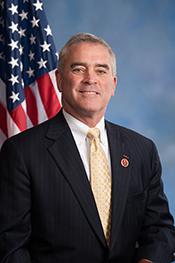
The Oversight Record
CEOs on the record — the fraud in writing · coalition actions continue below
Rep. Alexandria Ocasio-Cortez (D-NY)
CVS CEO on the Record · Glass-Steagall for Healthcare
Put CVS CEO David Joyner on the record about vertical integration at the January 22, 2026 hearing — confirming Aetna + CVS Pharmacies + CVS Caremark under one parent — and called for a "Glass-Steagall for Health Care." The CEO's defense of the captive strategy was directly contradicted by the FTC's own findings on medication markups.
"Whether you're a blue blooded capitalist or a card carrying democratic socialist, I think corporate monopolies are a problem. And this vertical integration is destroying people's ability to access care."
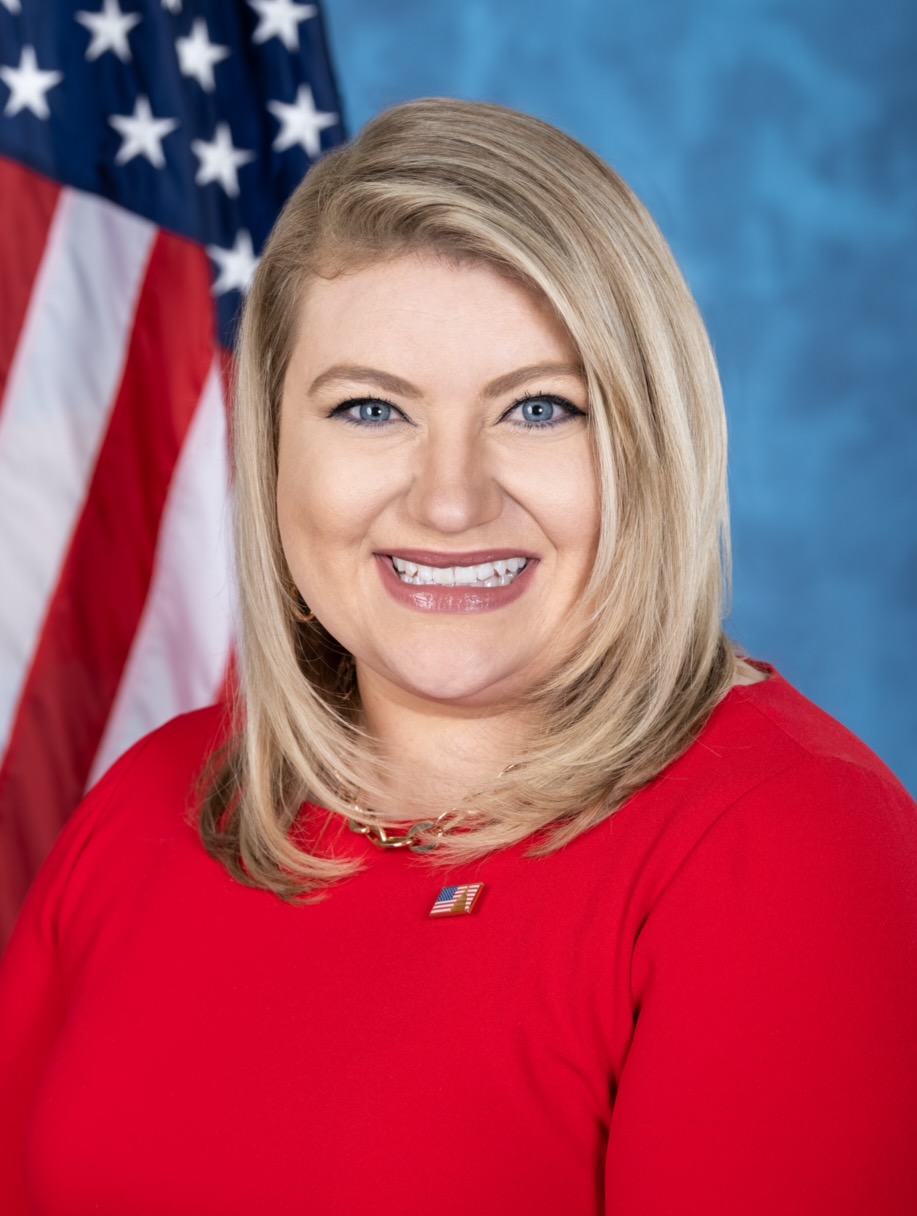
Rep. Kat Cammack (R-FL)
The No-Hands Moment — Executives Face No Penalty
At the January 22, 2026 House hearings with the CEOs of the five largest insurers, Cammack asked them to raise a hand if any executive takes a financial penalty when a patient is harmed by an insurer-caused delay or wrongful denial. No hands. She asked whether an overturned denial or appeal dents executive compensation. No hands again. A Republican naming the exact accountability gap the Civil Rights question asks.
"I asked health insurance CEOs to raise their hands if they're penalized when patients are harmed by delays or wrongful denials. Not. One. Hand. Patients pay the price. Executives protect the profits. That's the problem."
Rep. Pat Ryan (D-NY)
Ryan's district watched Optum acquire 2,500+ physicians across two deals in two years. He ran a community inquiry that generated thousands of constituent responses — mothers waiting a year for cancer diagnoses, families hit with thousands in overcharges — then submitted the results to DOJ, HHS, and FTC. When Trump staff reductions threatened to delay the antitrust monopolization suit, he wrote to AG Bondi demanding action. He documented UHC paying its own Optum practices 41–91% above market rate to squeeze independent competitors out of existence.
"United owns the insurance company, they own your doctor, they own the pharmacy and they own the software that processes all of your information — and they use it all to keep prices high and drive quality down."
The Oversight Record — Coalition & Committee Actions
The same accountability question, carried into the machinery: a 29-member amicus brief and a Judiciary Chairman's demand letter — the coalition and committee actions that continue the Oversight Record above.

Jayapal Leads 29-Member Amicus Brief — United States v. UnitedHealth Group
Rep. Pramila Jayapal (D-WA) led 29 House members in filing an amicus brief in United States of America v. UnitedHealth GroupUnited HealthcareThe largest health insurer in the United States by revenue. UnitedHealth Group operates two primary business segments: UnitedHealthcare (health insurance) and Optum (pharmacy care…, Inc. et al — the DOJ case alleging UHC used inaccurate diagnosis codes to inflate Medicare Advantage payments. MedPAC estimates MA plans will be overpaid by $1.2 trillion between 2025–2034 without intervention. The brief documents that UHC knew $2.1 billion in payments stemmed from incorrect diagnoses and took no corrective action.
"Medicare DisAdvantage, as I like to call it, was initially created as a way to save taxpayer dollars, but in reality, it does the exact opposite. It costs more and consistently has worse patient outcomes. UnitedHealth must answer to a jury — to the allegations that its network of MA plans intentionally 'upcoded' to increase the payments it received from Medicare — taxpayer dollars that did not go to provide healthcare to patients, but rather to pad UnitedHealth's profits."
— Rep. Pramila Jayapal, May 16, 2025
29 Signatories
Yassamin Ansari (AZ), Becca Balint (VT), Greg Casar (TX), Steve Cohen (TN), Valerie Foushee (NC), Sylvia Garcia (TX), Jesús "Chuy" García (IL), Maggie Goodlander (NH), Val Hoyle (OR), Glenn Ivey (MD), Hank Johnson (GA), Sydney Kamlager-Dove (CA), Ro Khanna (CA), Greg Landsman (OH), James McGovern (MA), LaMonica McIver (NJ), Eleanor Holmes Norton (DC), Ilhan Omar (MN), Chellie Pingree (ME), Delia Ramirez (IL), Pat Ryan (NY), Jan Schakowsky (IL), Mark Takano (CA), Rashida Tlaib (MI), Jill Tokuda (HI), Derek Tran (CA), Nydia Velázquez (NY), Bonnie Watson Coleman (NJ), Nikema Williams (GA)

Sen. Chuck Grassley (R-IA) — Senate Judiciary Chairman Demands Answers on Medicare Billing
Sen. Chuck Grassley, Chairman of the Senate Judiciary Committee and a former Finance Committee Chairman, wrote directly to UHC CEO Andrew Witty demanding detailed information on the company's Medicare billing practices. Grassley cited reporting that UHC's upcoding practices resulted in $8.7 billion in extra payments in 2021 alone, calling it "apparent fraud, waste, and abuse" that "harms not only Medicare beneficiaries, but also the American taxpayer." Grassley noted he has been pressing CMS and DOJ on improper Medicare Advantage payments since 2015.
"Despite these oversight efforts, [Medicare Advantage Organizations] continue to defraud the American taxpayer, costing them billions of dollars a year… The apparent fraud, waste, and abuse at issue is simply unacceptable."
— Sen. Chuck Grassley (R-IA), letter to UHC CEO Andrew Witty, February 25, 2025
Note: UHC called Grassley's concerns part of "an ongoing misinformation campaign by the WSJ." Witty stepped down as CEO on May 12, 2025.
The Jan 22, 2026 Convergence
The January 22 House hearing produced Rep. Murphy's eight-attempt disclosure and AOC's CVS exchange simultaneously — two of the most widely shared congressional moments on healthcare in years, from opposite ends of the political spectrum, on the same day. The argument has escaped partisan framing. That is the precondition for legislation.