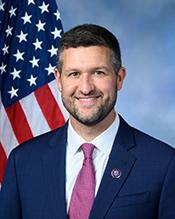
Rep. Pat Ryan (D-NY)
The Constituent Inquiry That Became a Federal Record
Pat Ryan represents New York's 18th Congressional District — the Hudson Valley — where Optum Health purchased CareMount Medical (2,100+ providers, 1.6M patients) in 2022, then Crystal Run Healthcare (~400 providers) in 2023. His district became a case study in what happens when a single corporate conglomerate absorbs the local healthcare system. He responded by running a community inquiry that generated thousands of constituent responses, submitting the results directly to the DOJ, HHS, and FTC — and then writing to AG Bondi when staff reductions threatened to delay the antitrust investigation that followed.
Ryan's frame is not clinical — he is not a physician-congressman like Dunn or Murphy. His frame is constituent advocate and antitrust enforcer. He is the member who documented what vertical integrationVertical IntegrationA corporate structure in which a single entity owns multiple layers of the healthcare delivery chain — insurer, pharmacy benefit manager, pharmacy, and physician group — creating s… looks like from the inside of a community after it happens.
Tell Them AbilityForge Sent You
Rep. Ryan is on record fighting for his constituents against vertical integration — from the community inquiry to the letter to AG Bondi. Contact him to express your support and urge him to push S.3822 forward. Every constituent call counts.
Section I · The Ground Truth
What Optum Did to the Hudson Valley
Between 2022 and 2023, Optum Health — a subsidiary of UnitedHealth GroupUnited HealthcareThe largest health insurer in the United States by revenue. UnitedHealth Group operates two primary business segments: UnitedHealthcare (health insurance) and Optum (pharmacy care… — acquired the two largest independent physician groups in the Hudson Valley. The result: a region that had been served by competing local medical groups is now almost entirely in the hands of one corporate conglomerate that also owns the largest health insurer in the United States.
2022 Acquisition
CareMount Medical
Multi-specialty medical group. 2,100+ providers. 1.6 million patients in the tri-state area. One of the largest independent physician groups in the Northeast — now owned by Optum.
2023 Acquisition
Crystal Run Healthcare
~400 providers. The remaining major independent physician group in the Hudson Valley. After this acquisition, Optum controlled the market for outpatient physician services in the region.
10%
of all US physicians now employed or affiliated with UnitedHealth Group / Optum
90,000+ physicians nationally
41–91%
more than market rate UHC pays its own Optum practices in the Hudson Valley
Source: STAT News analysis, Nov 2024
$14B
UnitedHealth Group profits in 2024
As constituent care deteriorated
The Payment Differential — Weaponized Vertical Integration
UnitedHealthcare paying its own Optum practices 41–91% above market rate is not an accounting anomaly. It is the mechanism by which vertical integration kills competition. Independent practices that are not owned by UHC cannot survive on reimbursement rates that are less than half what Optum receives from the same insurer. They close or they sell — to Optum. The consolidation is self-perpetuating. As Rep. Ryan documented: this is not a market. It is a capture.
Section II · The Congressional Action
The Community Inquiry — Thousands of Constituents → Federal Record
Rep. Ryan launched a community inquiry asking Hudson Valley residents to document their experiences with Optum-owned practices. The inquiry generated thousands of responses. Ryan then compiled and submitted the results directly to the Department of Justice, the Department of Health and Human Services, and the Federal Trade Commission for further investigation.
What Thousands of Constituents Reported
Parents of disabled children unable to get treatment
Mothers waiting almost a year for a cancer diagnosis
Families slammed by thousands of dollars in overcharges
Declining quality of care following Optum acquisition
Increase in fees and incorrect billing (1 in 4 patients reported double billing)
Long wait times, difficulty scheduling, shorter appointments
Same-day sick appointments eliminated to maximize scheduled slots
Optum staff burnout and chaotic, overburdened work schedules
From a CareMount Doctor — On Record
"We used to be able to reserve several office visit openings a day for those that call in the morning who need a sick visit… Optum did away with this availability to be sure every single time slot possible was booked up several days in advance, thus ensuring maximum patient visits for max profits."
— CareMount physician employed by Optum, The Examiner News
The Upcoding Allegation
Ryan's letter also documents credible reports that Optum pressures its physicians to manipulate billing codes attached to patient medical records to boost payments from the federal government to UHC's Medicare Advantage plans. This practice — upcoding — makes patients appear sicker than they are, triggering higher federal payments while leaving consumers and taxpayers on the hook for higher costs. This is the same upcoding mechanism the Massachusetts AG documented in her $100M lawsuit against UHC, and the same pattern documented in the DOJ's civil Medicare fraud investigation.
The upcoding investigations — Scienter record →Section III · Primary Source · May 20, 2025
The Letter to AG Bondi — Preserve the Investigation
On May 20, 2025, Rep. Ryan wrote to Attorney General Pam Bondi and Assistant AG Slater demanding they preserve and strengthen the DOJ's antitrust investigation into UnitedHealth Group, following reports that Trump administration staff reductions at the DOJ were threatening to delay a monopolization suit against the company until late 2025.
From the Letter — His Words
"Through my community inquiry into United, I heard from parents of disabled children unable to get treatment, mothers waiting almost a year for a cancer diagnosis, and families slammed by thousands of dollars of overcharges. All so the largest health care company in the world can continue to make record-breaking profits. Now the Justice Department is delaying its monopoly investigation — and it's American families who pay the price."
"United owns the insurance company, they own your doctor, they own the pharmacy and they own the software that processes all of your information — and they use it all to keep prices high and drive quality down."
— Rep. Pat Ryan, press statement, May 20, 2025
What the Letter Demands
Preserve and strengthen the DOJ Antitrust Division's investigation into UHG's ownership of physician offices — opened February 2024
Counter staff reductions that were threatening to delay a monopolization suit until late 2025
Take "strong enforcement action as necessary" — not just investigation but consequences
Address the anticompetitive harm to patients and rival physicians caused by UHC paying its own Optum practices 41–91% above market rate
Three Weeks Later — AOC & Doggett Write on a Different Track
On June 9, 2025 — three weeks after Ryan's letter — Representatives AOC and Lloyd Doggett wrote to AG Bondi on a different but parallel track: the nursing home kickback and DNR pressure allegations from The Guardian investigation. Two separate congressional letters to the same AG, three weeks apart, about different aspects of the same company. The accountability argument was arriving from multiple directions simultaneously.
Rep. AOC — The DOJ Letter on Nursing Homes →Section IV · Legislative Record
What Ryan Is Building in Congress
Ryan's legislative record addresses both the PBMPBM — Pharmacy Benefit ManagerA Pharmacy Benefit Manager (PBM) is the intermediary that administers prescription-drug benefits for health plans and employers — deciding which drugs a plan covers, negotiating re… side and the pharmaceutical pricing side of the same structural problem his community inquiry documented.
Pharmacists Fight Back Act — Co-Lead
Comprehensive legislation requiring adequate reimbursements to pharmacists, prohibiting PBMs from steering patients to their own pharmacies, and eliminating PBM restrictions on patient choice. This directly addresses the PBM ownership problem documented in the State Battlefield section — at the federal level, without an ERISA ceiling.
Why the federal version matters — ERISA ceiling →Drug Price Transparency in Medicaid Act — Cosponsor
Prohibits PBMs from charging Medicaid more than they paid pharmacies for a drug — closing the spread-pricing loophole that PBMs use to extract margin from Medicaid programs at taxpayer expense.
Amicus BriefAmicus BriefFrom the Latin amicus curiae — 'friend of the court.' A legal brief filed by a non-party who has a relevant interest in the outcome of a case. — United States v. UnitedHealth Group · May 2025
Ryan co-signed the Jayapal-led amicus brief in the DOJ's Medicare Advantage upcoding case — joining 28 other House members in filing in support of the government's position that UHC used inaccurate diagnosis codes to inflate MA payments. The brief documents UHC knew $2.1 billion in payments stemmed from incorrect diagnoses and took no corrective action. Ryan's signature connects his antitrust track (Optum physician acquisition) to the Medicare fraud track (upcoding via Optum-owned practices) — the same company, both mechanisms, documented from the same Hudson Valley district.
Full amicus brief record — Congressional Voices hub →Reins in Big Pharma's abuse of US patent law to make lower-cost generic alternatives easier to produce. First legislation Ryan introduced in the 119th Congress as part of his broader Affordability Agenda.
Why Ryan's Lane Is Distinct
The physician-congressmen on this site — Dunn, Murphy, Wenstrup — bring clinical credibility. Warren and Hawley bring the bipartisan legislative architecture. AOC brings the hearing record. Ryan brings something different: a documented evidentiary record built from the ground up, from thousands of ordinary constituents who watched their local healthcare system get absorbed by a single company. He didn't observe this from a hearing room. He watched it happen to his district — and then he built a federal record out of what his constituents told him.
Congressional Voices