Independent Voices — Allied Physician Assistant
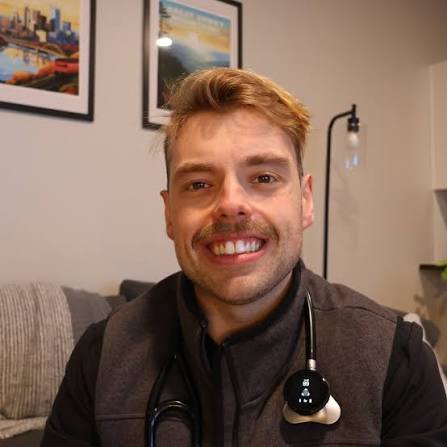
Shane Grayson, PA-C, MPAS
Hospital Physician Assistant · Pittsburgh, PA · @thepittsburghpa
Why He's Here
Shane Grayson is a hospital physician assistant in Pittsburgh — not a doctor, not a nurse, the profession that lives in the middle of the care team and sees the whole board. He turns the daily absurdity of the system into content that is genuinely funny and genuinely true: the prior-auth call that sends a patient who can't walk to physical therapy, the "hospital hierarchy" that forgets who's actually at the center. And then, when it matters, he drops the jokes entirely and says the quiet part with total clarity: insurance companies shouldn't decide treatment plans, and access to care that could save your life is not a paperwork question — it's a human one.
AbilityForge features his work — with his permission, as a confirmed ally — because it meets the standard we hold: specific, sourced, patient-first, and unafraid to name what's happening. He is the first Physician Assistant voice in this room. The first of what we hope will be many.
On This Page
- I. "Life Is a Fundamental Value" — The Call to Action
- II. The Black-Flag Gripes — "Insurance Companies Shouldn't Decide Treatment Plans"
- III. Prior Authorization — The Bane of His Existence
- IV. The Big-Words Denial & the Bot That Clips the Record
- V. Patient-Centered Care — Who the Hierarchy Forgets
- VI. Burnout Is a Systems Problem, Sold as a Personal Failure
- VII. Follow the Work
Section I · The Centerpiece
"Life Is a Fundamental Value" — The Call to Action
On July 7, 2026, Shane posted a call to action — half meme, half manifesto — framed as "prepping for my Netflix documentary about how insurance companies deny life-saving care." The joke is the frame. What he actually says underneath it is the argument this whole site is built on, delivered by a clinician who watches it happen on shift:
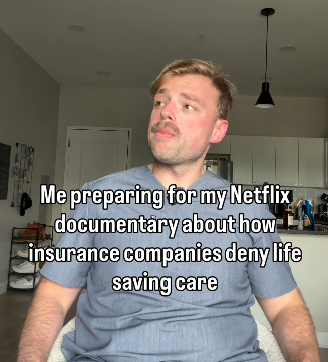
"A call to action for Netflix" — opens on Instagram.
"People deserve access to life-sustaining treatment. People deserve access to life-changing treatment. People deserve the chance to feel better. As a PA, I've seen what happens when patients are forced to fight for care they and their medical team know they need. Those decisions shouldn't be driven by paperwork, delays, or profits. Our nation's founding ideals recognize that life is a fundamental value. That's why I'll never stop speaking up for patients and pushing for accountability when life-altering care is denied. This conversation isn't about politics to me — it's about people."
— Shane Grayson, PA-C (@thepittsburghpa), July 7, 2026
Why This Lands Here
"Life is a fundamental value" is not a slogan — it's the Civil Rights framing this site was built to make. When a clinician says the denial of life-saving care is a human question and not a political one, he is drawing the exact line AbilityForge draws: this isn't left or right. It's whether a corporation gets to overrule the medical team at the bedside. Shane arrived at that line independently — which is how you know it's true.
Section II
The Black-Flag Gripes — "Insurance Companies Shouldn't Decide Treatment Plans"
In a stark black-banner series, Shane names three things the care team knows and the system ignores. He doesn't rank his own profession first — he leads with the patient, then lifts the people beside him: nurses, occupational therapists, physical therapists. It's solidarity across the whole board, from the one who sees all of it.
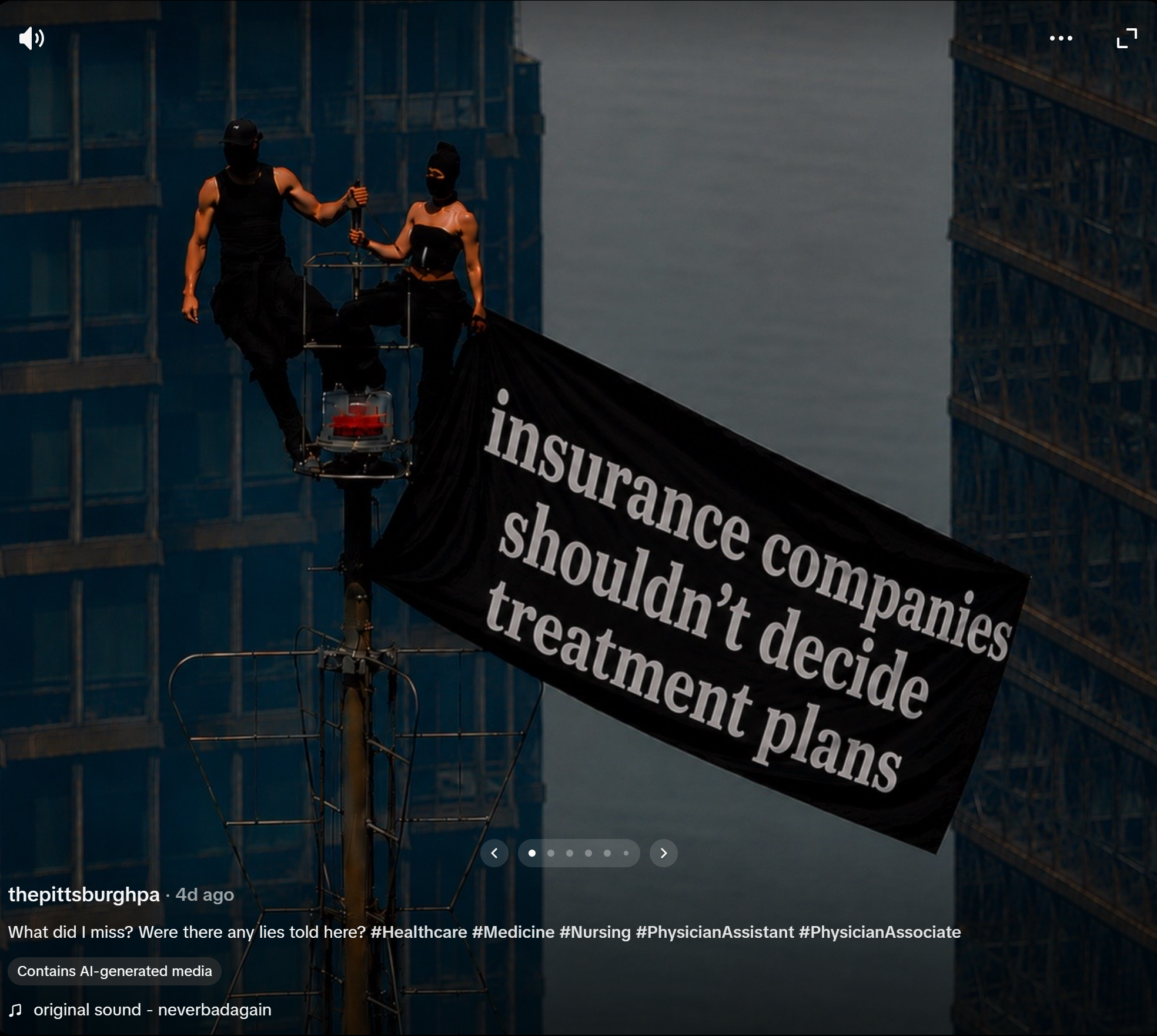
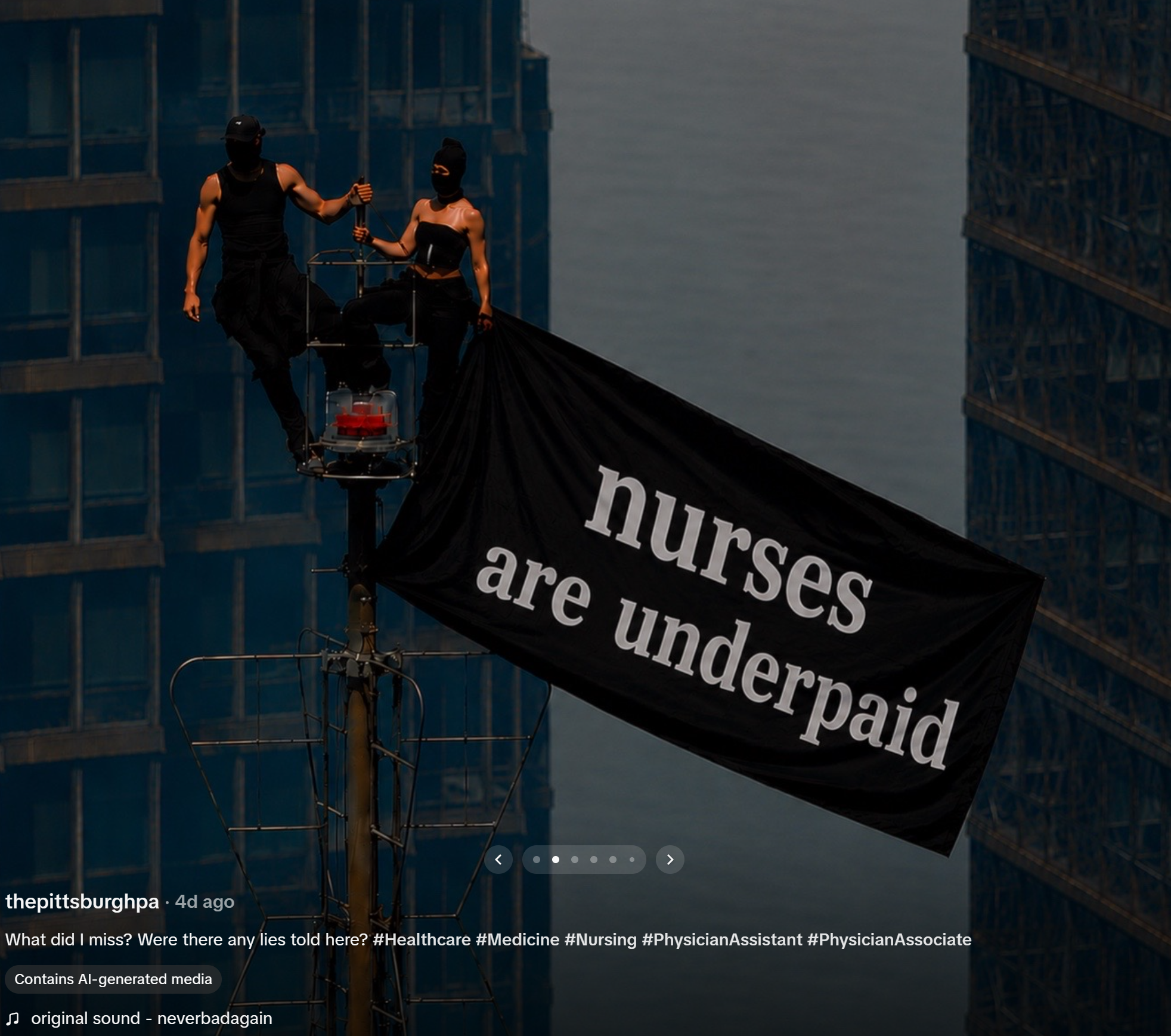
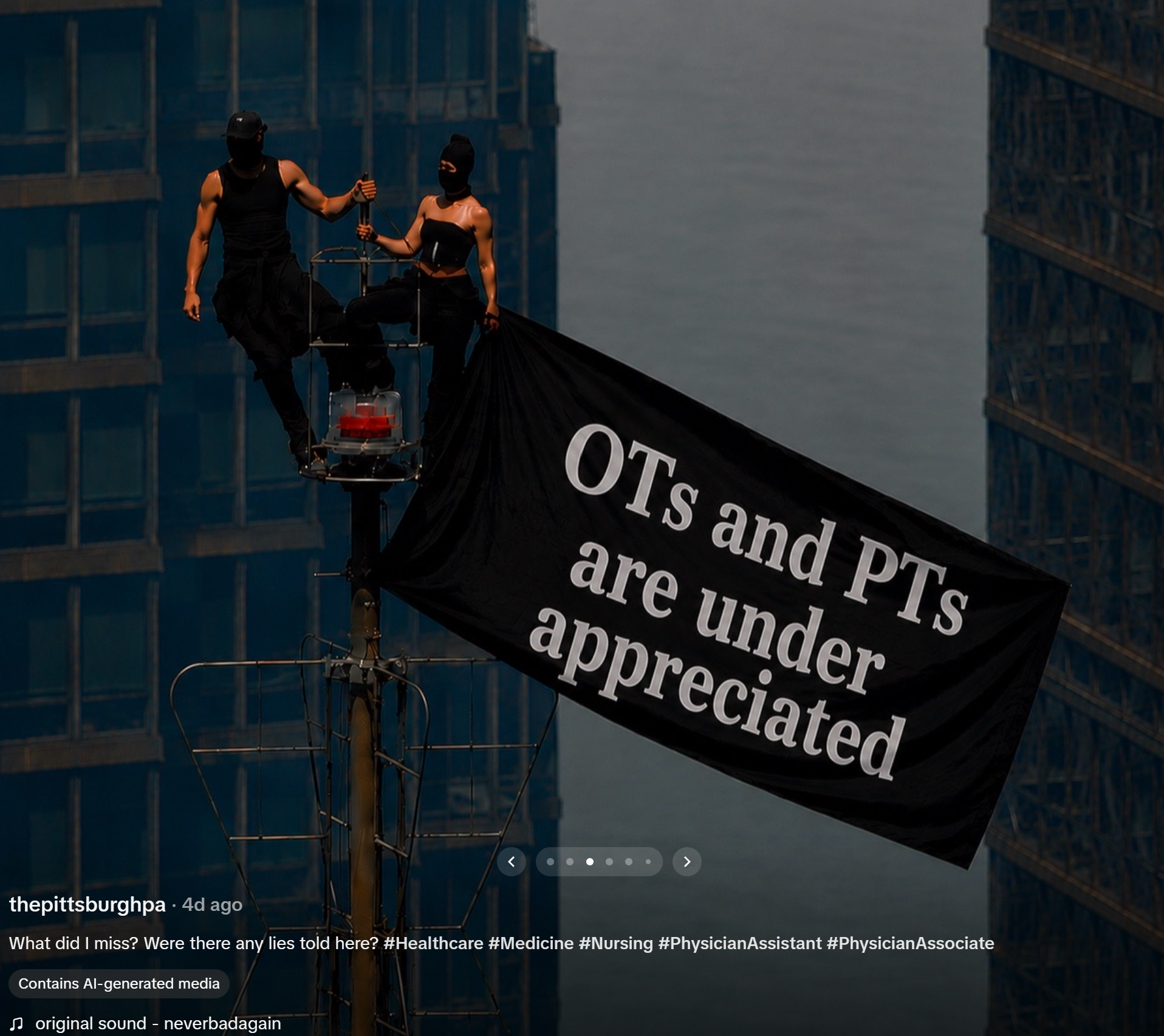
Three banners, one message. Opens on Instagram. (Contains AI-generated media, per his post.)
The Line Every Voice in This Room Draws
"Insurance companies shouldn't decide treatment plans" is Dr. Slaughter's accountability question, Rep. Neal Dunn, MD's "prior auth is the practice of medicine," and the second of the site's four Civil Rights Questions — all in six words a PA put on a flag. When a doctor, a nurse, a congressman, and a physician assistant independently land on the same sentence, that's not a coincidence. It's a diagnosis.
Section III
Prior Authorization — The Bane of His Existence
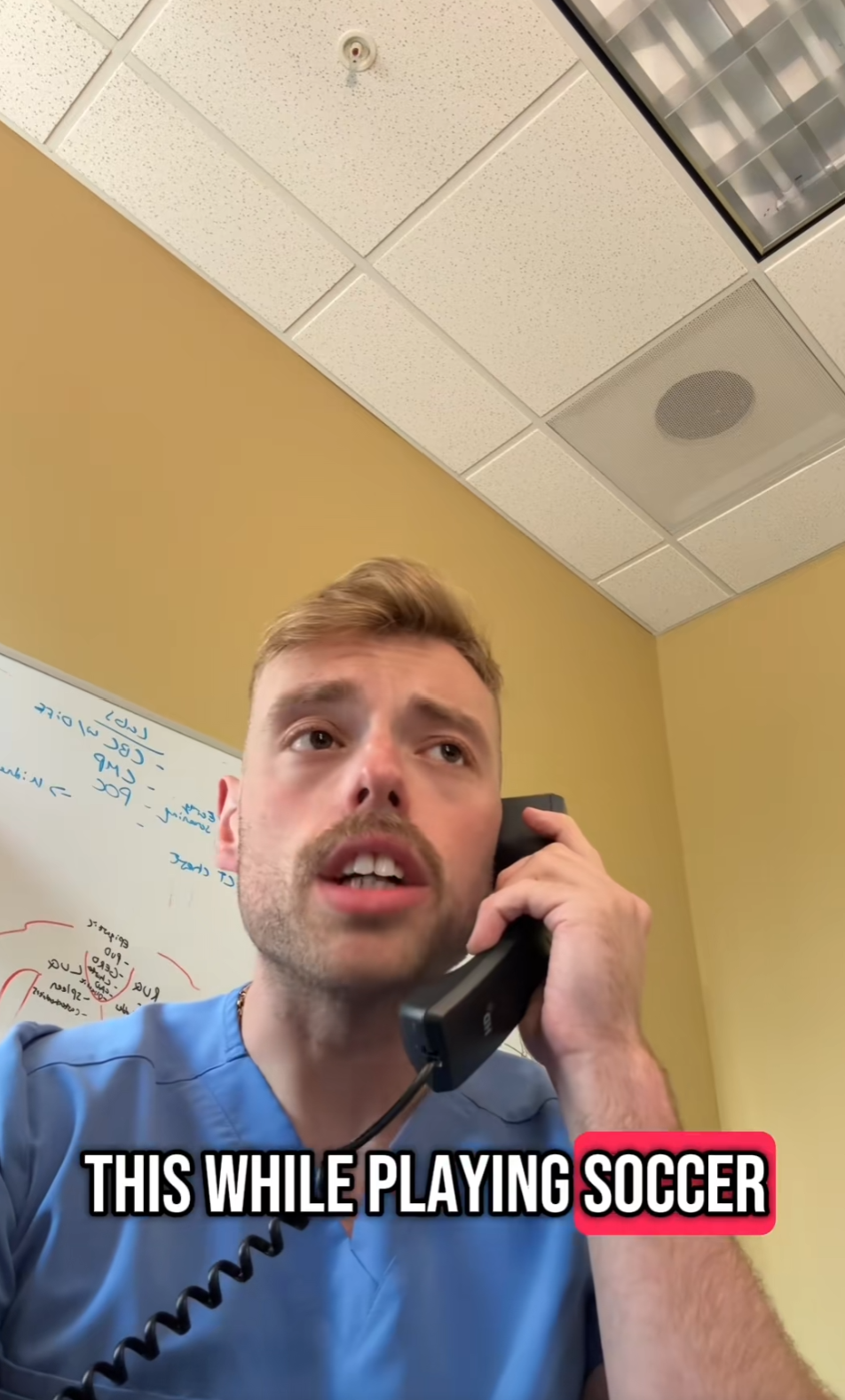
"What it's like doing prior authorizations" — opens on Instagram.
"It's the bane of my existence." Shane dramatizes a scene every hospital clinician knows by heart: a patient who cannot walk needs an MRI. He calls it in. "United Headquarters" brushes off the need for imaging and suggests — for the patient who cannot walk — that they be sent to physical therapy instead. It's satire because it has to be. It's accurate because that's the actual logic of a system where the person saying "no" never has to look at the patient.
The Same Machine, From the Inside
This is the Wrongful Denial Echo Chamber narrated by the person holding the phone. The MRI isn't denied because it's wrong — it's denied because denial is cheaper today, and the delay is the point. Shane's version just adds the detail the industry hopes you'll miss: the clinician who ordered the care spends his day begging a script-reader to approve it.
Section IV
The Big-Words Denial & the Bot That Clips the Record
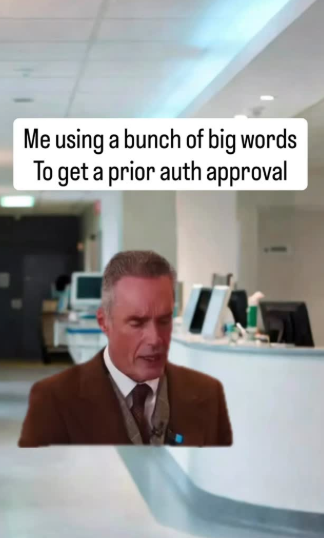
"Me using a bunch of big words to get a prior auth approval" — opens on Instagram.
Shane's dense, verbose, Jordan-Peterson-flavored plea for a life-saving medication is a joke about how hard clinicians will work to force a "yes" out of the machine. But there's a real and darker punchline underneath it — and it connects directly to another voice in this room.
Brevity Is the Soul of Wit — Even for the Machine
Dr. Caleb Masterson recorded a peer-to-peer confession: when the record gets wordy, the automated denial system clips it — and the qualifying detail buried in all those big words never gets read. So the very eloquence a clinician reaches for to save a patient can be the thing the bot truncates and misses. The tool sold to make full-record ingestion easier for the claim process does the opposite. Shane's joke and Masterson's evidence are the same story told twice: the system rewards the denial, not the reading.
Section V
Patient-Centered Care — Who the Hierarchy Forgets
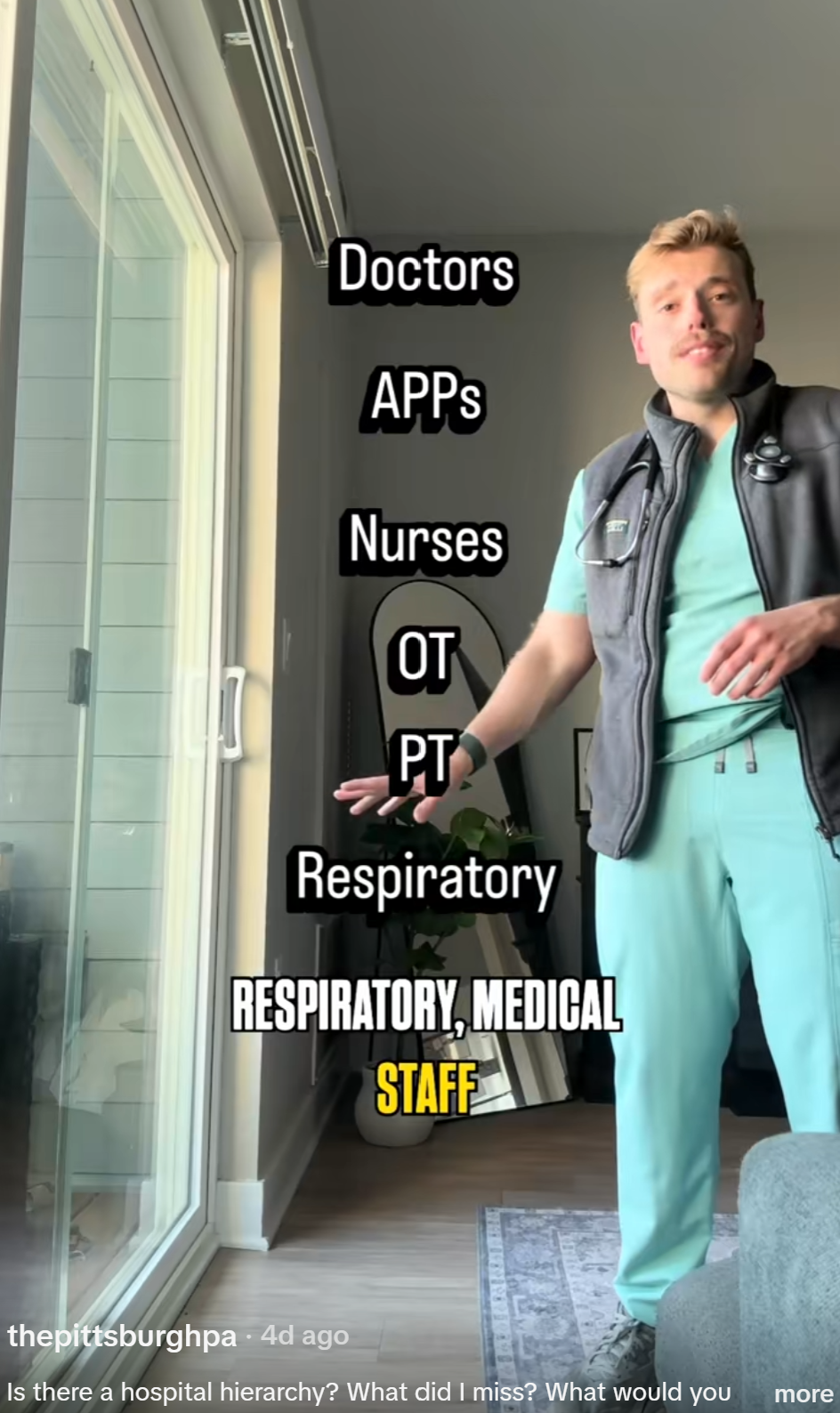
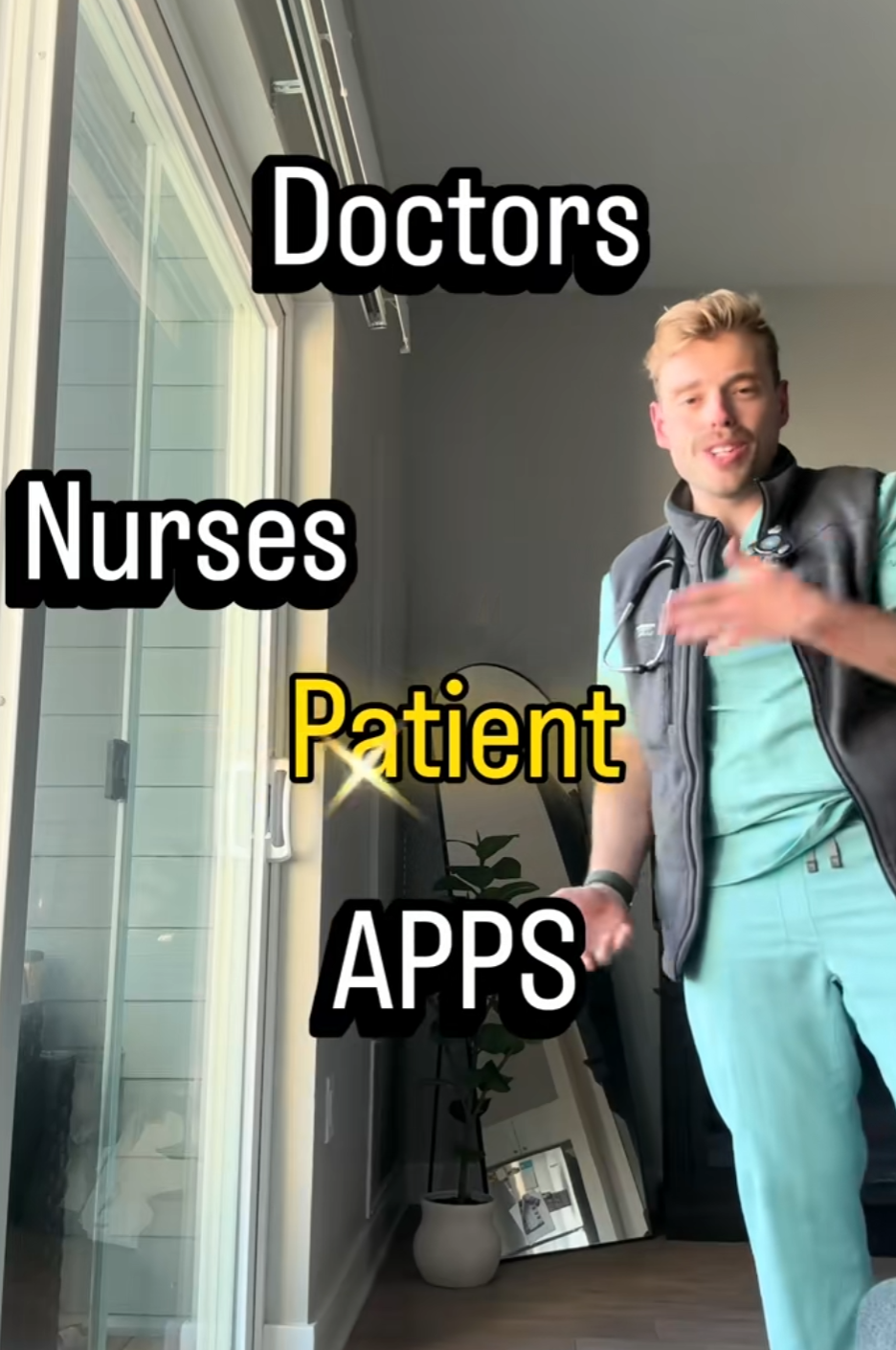
Shane sets the "hospital hierarchy" up the wrong way first — Doctors, APPs, Nurses, OT, PT, Respiratory, stacked like a ladder — and then knocks it down. The right picture isn't a ladder at all. It's a team arranged around the patient, who belongs in the center. Coming from the profession that sits between the physicians and the bedside, it's a pointed reminder: every tier of that "hierarchy" exists for the one person the org chart tends to leave off.
The Whole Point of the Room
Put the patient in the center and every denial looks different — because the question stops being "what does the policy say" and becomes "what does this person need." That reorder is the entire argument of the Clinical Integrity Amendment: the medical team, not the paperwork, decides.
Section VI
Burnout Is a Systems Problem, Sold as a Personal Failure
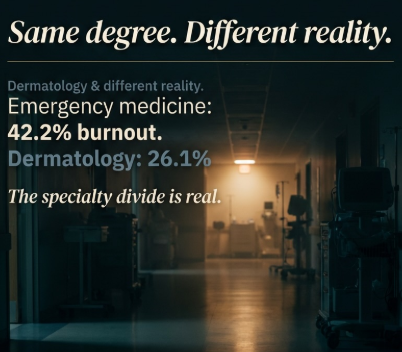
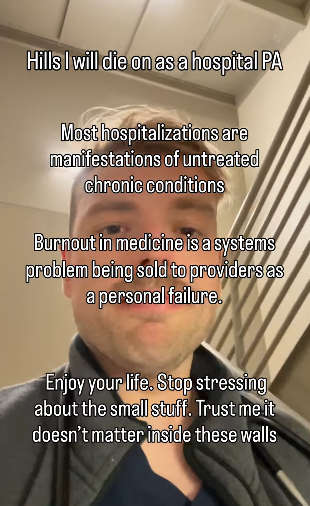
"Nobody warns you about this part of the job." Shane walks through new national data on PA burnout — and refuses the usual framing that it's a personal resilience failure. The numbers say otherwise.
1 in 3
PAs report ≥1 burnout symptom (34.2%)
42.2%
Emergency-medicine PAs — hit hardest
26.1%
Dermatology — the least
A Systems Problem, Sold as a Personal Failure
His hill to die on: "Burnout in medicine is a systems problem being sold to providers as a personal failure." And the data agrees with him — a perceived decline in working conditions raised burnout odds more than workload, understaffing, or debt combined. The one thing that pushed back? Satisfaction with work-life balance.
Source: Health Affairs Scholar, 2025 — national survey of 122,360 PAs. The same structural failure the rest of this room documents from the patient's side, felt from the clinician's.
Section VII
Follow the Work
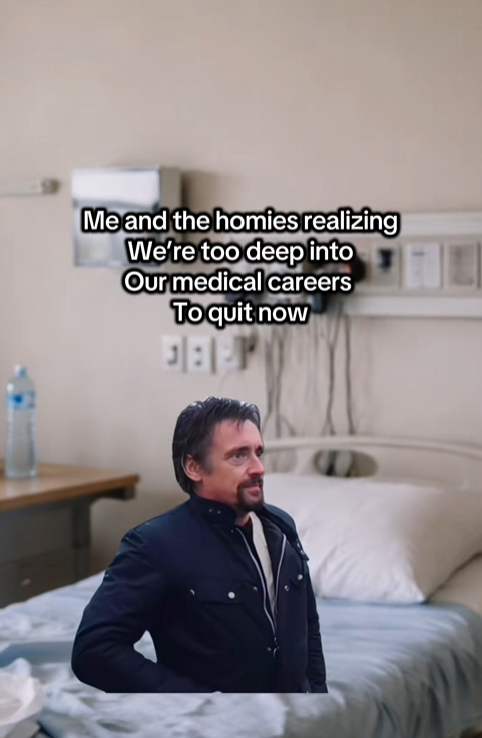
"Should've been a cowboy." The humor is the doorway; the advocacy is the room. Shane and his colleagues joke that they're "too deep into our medical careers to quit now" — and then keep showing up for the patients anyway. That's the whole thing: the people who find the system absurd are the ones still inside it, fighting to make it less so.
Instagram · @thepittsburghpa
Prior-auth satire, patient-centered care, PA life, and the call to action — from inside hospital medicine.
TikTok · @thepittsburghpa
The same work, second platform.
A Note on This Feature
Shane Grayson's content is his own; AbilityForge features it as an allied voice, with his permission, and neither controls nor hosts his videos — the images above are screenshots that link out to his Instagram. Some of his posts contain AI-generated media, as labeled on his own account (the black-banner series among them). The PA burnout figures are attributed to their source: Health Affairs Scholar, 2025, a national survey of 122,360 physician assistants (34.2% reporting at least one burnout symptom; emergency medicine 42.2%, dermatology 26.1%). His quoted call to action is reproduced from his July 7, 2026 post. Nothing here is medical or legal advice.