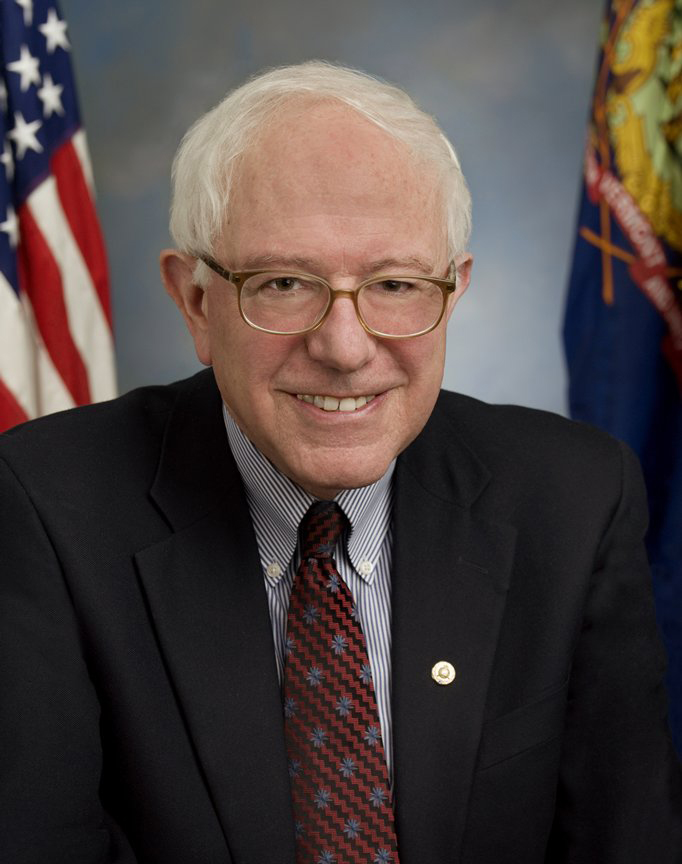
Official portrait, U.S. Senate
Congressional Voices — Independent · Vermont · Senate
Sen. Bernie Sanders (I-VT)
U.S. Senate · Lead sponsor, Medicare for All Act (S.1506) · Caucuses with Democrats
Tell Them AbilityForge Sent You
Whatever you think of Medicare for All, his office counts the calls. Tell Sen. Sanders where you stand, and what the denial system has cost you or someone you love.
“The Time for Incrementalism Is Over”
In a video posted November 18, 2026, after the midterm elections, Sanders lays out the access problem first: communities where people can’t find a doctor, dentist or psychologist even with insurance, long waits to be seen, and shortages across the health workforce. Then he names the remedy he has carried for years.
“Despite our massive health care expenditures, we don’t have enough doctors, we don’t have enough dentists, we don’t have enough nurses, mental health practitioners, pharmacists, or home health care workers.”
— Sen. Bernie Sanders (I-VT), November 18, 2026
“All of this is unacceptable, and it must change. Now, the Democrats have taken back Congress. The time for excuses is over. The time for incrementalism is over. The new Democratic Congress must pass Medicare for All.”
— Sen. Bernie Sanders (I-VT), November 18, 2026
Checking His Numbers
- “Tens of millions” can’t find a doctor. Federal data backs the scale. HRSA reports that about 20 percent of the U.S. population lives in a primary care Health Professional Shortage Area, which is roughly 68 million people, before counting dental and mental health shortage areas. HRSA shortage areas ↗
- “1 out of 4 Americans” can’t afford their prescriptions. Close. In a KFFKFFAn independent, nonpartisan source of health-policy research, polling, and journalism. poll from fall 2025, 26 percent of adults said they or someone in their household had problems paying for prescription drugs in the past year. That measures trouble paying, which is broader than going without. KFF, Nov. 2025 ↗
- “The Democrats have taken back Congress.” The Associated Press count backs the seat numbers behind it. As of November 18, 2026, 4:52 p.m. ET, AP’s count showed Democrats with 56 Senate seats (including 2 independents who caucus with them) and Republicans with 44. As of 4:54 p.m. ET, AP’s count showed Democrats with 257 House seats won and Republicans with 171, with 7 House seats not yet counted as won for either party. These counts may have changed since.
The Bill: Medicare for All Act (S.1506)
- →Introduced April 29, 2025 with 16 Senate cosponsors, and referred to the Senate Finance Committee. The House version, H.R. 3069, was introduced the same day by Reps. Pramila Jayapal and Debbie Dingell with 104 cosponsors.
- →One public plan covering everyone, a single-payerSingle-PayerOne public plan pays for everyone's covered care, funded by taxes instead of premiums. system. It adds dental, hearing and vision care, lets patients choose their doctors, and drops premiums, copays and deductibles.
- →No committee vote so far. Bills that don’t pass expire when a Congress ends, and the 119th Congress ends January 3, 2027. To move in the new Congress, it would have to be reintroduced under a new number.
The Cost Debate, Both Sides
Both sides lean on models of a system that doesn’t exist yet. The two estimates cited most often:
Supporters cite
A 2020 study in The Lancet (Galvani et al.) estimated single-payer would cut national health spending by about 13 percent, more than $450 billion a year, and save more than 68,000 lives a year. PubMed ↗
Critics cite
A 2018 Mercatus Center study (Charles Blahous) estimated an earlier Sanders plan would raise federal health spending by $32.6 trillion over ten years. It found that doubling federal individual and corporate income taxes would not fully cover it. Report ↗
Where This Fits
Sanders is proposing to replace how care is paid for. Most of the bills on this site work inside the current system, holding insurers and executives accountable for denials, upcoding and looting.
AbilityForge keeps the record of both tracks. The access shortages and drug costs he describes are the same harms documented in the Problem Room and the Reason Room, whichever remedy Congress chooses. Legislation We Watch →