Independent Voices — Allied Physician
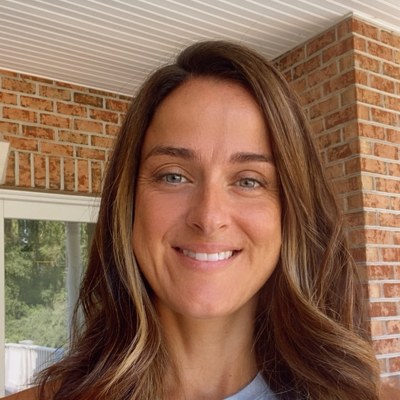
Dr. Julie Militello
Board-Certified Internist · Women's Health Advocate · @oncallwith_drjulie
In Her Own Words
Her Instagram today
📣 Patient advocacy + women's health
🚨 Calling out what's broken in healthcare
👇 Medicine, unfiltered
Her channel bio
"I'm Dr. Julie Militello, a board-certified internist, women's health advocate, and your go-to source for REAL TALK about health, hormones, and feeling your best at every stage of life. Expect evidence-based medical advice, honest conversations, a little humor, and absolutely NO judgment."
On her channel:
- 💗 Women's health, hormones & menopause
- 🩺 Preventive care, screenings & lab work
- 💪 Bone health, longevity & healthy aging
- 🌸 Wellness, lifestyle & real-life conversations
- 🎙️ Candid discussions about the things nobody talks about enough
"My mission? To help you ask better questions, advocate for your health, and stop settling for 'that's just part of getting older.'"
Why She's Here
AbilityForge features the part of Dr. Julie's work that documents the system standing between her patients and that care — which, as her Instagram now says, has become a center of her work: patient advocacy, and calling out what's broken. She takes the camera into the call: the insurer on the line, the 20-page form in her hand, the patient waiting on samples. It is the clearest first-person record on this site of step therapy, delay, and administrative burden as a physician lives it.
Featured with her permission, as a confirmed ally. Her videos are hers; the images below are screenshots that link to her posts. This page will grow as her work does.
On This Page
- I. "Is Anyone Reading the Notes?"
- II. The Form Wall: 185 Questions. 602. 868.
- III. Denied in 20 Seconds
- IV. "You're Dictating Care. You're Not the Doctor."
- V. The Approval They Gave — and Then Asked Back · Denied for the Saline Bag
- VI. Priced Out — Insured Today, Gone Tomorrow
- VII. Why She Keeps Going
- VIII. On the Call with Anna Harris, RN
- IX. Follow Her Work
Section I · The Core Complaint
"Is Anyone Reading the Notes?"
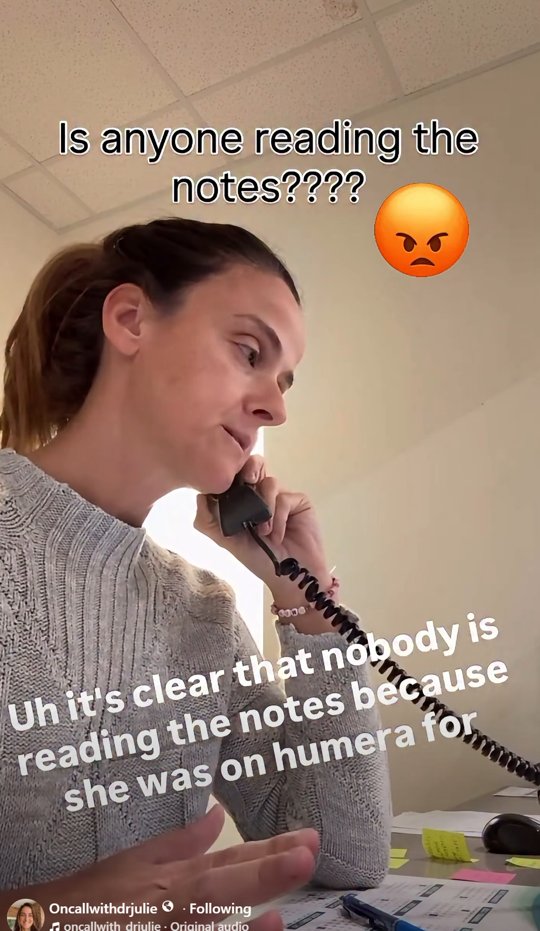
"Is anyone reading the notes????" — opens on Instagram.
On the phone with the insurer, Dr. Julie walks through a history that is already documented — every step of it — in the notes the insurer required her to send.
"She was on Humira for a long time. She failed methotrexate. She failed hydroxychloroquine. We switched her to Enbrel; she did terribly — this is all documented in the note. You told us to switch to Hyrimoz. We tried that too and it's failed, and it's all in the note. She's failed two of your preferred drugs. TWO! What else can you possibly want from her? … Well, now she's completely symptomatic and she's on high-dose steroids. How is this helping the patient?"
— Dr. Julie Militello. Drug names standardized for spelling.
The Notes Are the Record
Insurers require physicians to send clinical notes as the documentation standard for coverage decisions — and then decide without reading them. That is the pattern AbilityForge calls Prior Knowledge Omission: the history is in the insurer's hands, and the decision ignores it. Meanwhile the patient goes back on high-dose steroids.
Section II · Administrative Burden
The Form Wall: 185 Questions. 602. 868.
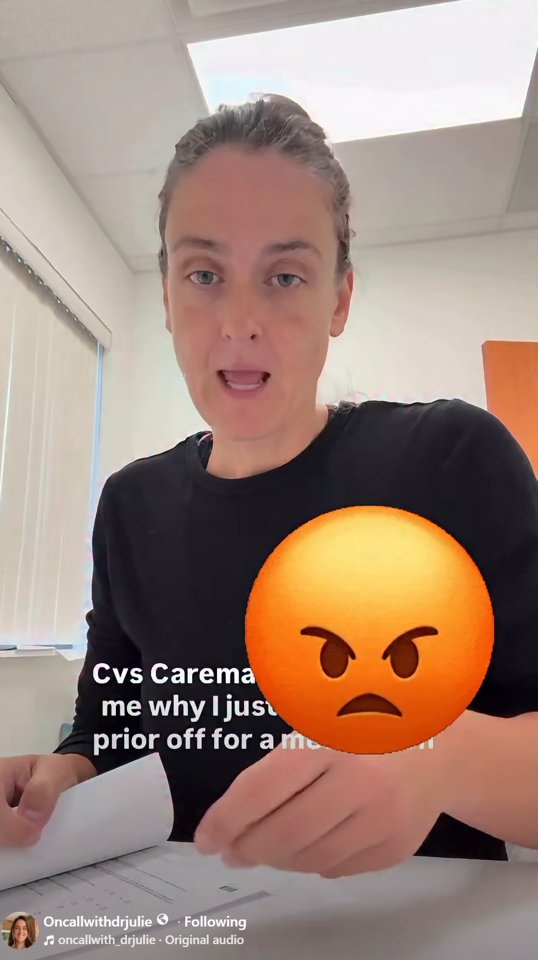
185 questions, 20 pages — opens on Instagram.

602 questions, 102 pages — opens on Instagram.
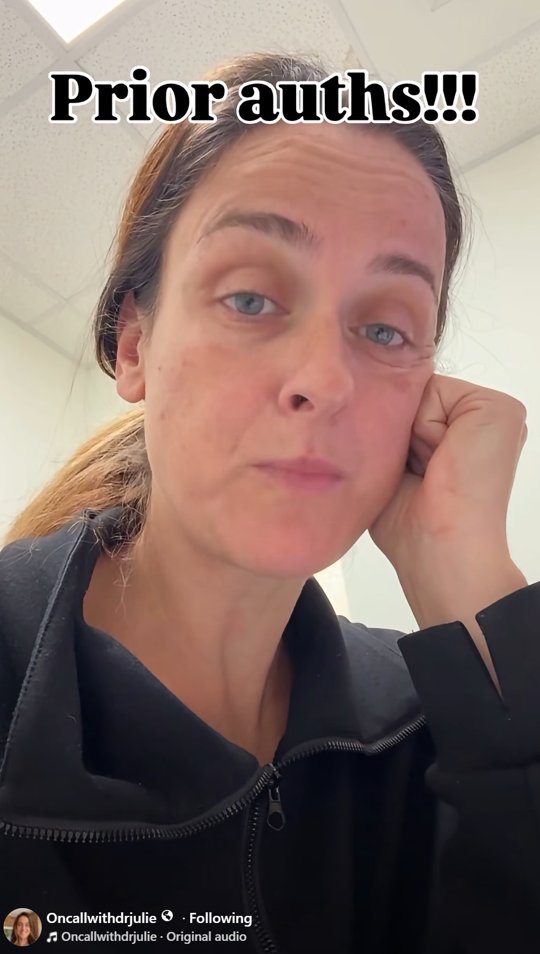
868 questions — opens on Instagram.
"CVS Caremark, explain to me why I just got a prior auth for a medication called Rinvoq for a patient… It is one hundred and eighty-five questions long?! It was 20 pages. What doctor has the time to fill out 185 questions? THIS is what's wrong with healthcare. THIS is what is driving costs up."
"602 questions is the prior auth that I just received just now for a patient that we're requesting to put on Actemra. The patient is already on Rinvoq, not doing well, has a cardiac history. We're asking to switch it, and the pharmacy is saying, no, please, you need to try one of these preferred products. And guess what's on there? Rinvoq. So they're not only not reading the notes that I'm sending — they're wasting everyone's time, energy, and money, because I had to print 102 pages out for this prior auth. I have to pay someone whose job it is to solely fight the insurance companies, and they're also delaying care. So now the patient's on a high-dose steroid, which is not ideal. They're doing terribly without their meds."
"868 questions on this prior auth I just got. For a patient for Enbrel, who has been on this medication before. Who has failed alternatives, who I have documented multiple times in all of the notes. These questions ask questions they could easily find in my note. What is the point of my notes if no one is going to read it?"
— Dr. Julie Militello. Two of these patients were living on samples while the paperwork was pending; the third went onto high-dose steroids.
Asked to Try the Drug They're Already On
Rinvoq (upadacitinib) is a JAK inhibitor. In 2021 the FDA added a boxed warning — its strongest — to Rinvoq and the other JAK inhibitors for arthritis and inflammatory conditions, citing increased risk of serious heart-related events, cancer, blood clots and death, and told prescribers to weigh those risks especially in patients with heart risk factors. Dr. Julie's patient has a cardiac history and is doing poorly on Rinvoq. The 602-question form's list of "preferred products" to try first included Rinvoq. FDA safety communication →
Paperwork as a Gate
The insurer writes the form once; the clinic fills it out every time — and the patient waits. That is administrative burden, and Dr. Julie's three forms are the clearest picture of it on this site.
Section III · Automated Denial
Denied in 20 Seconds
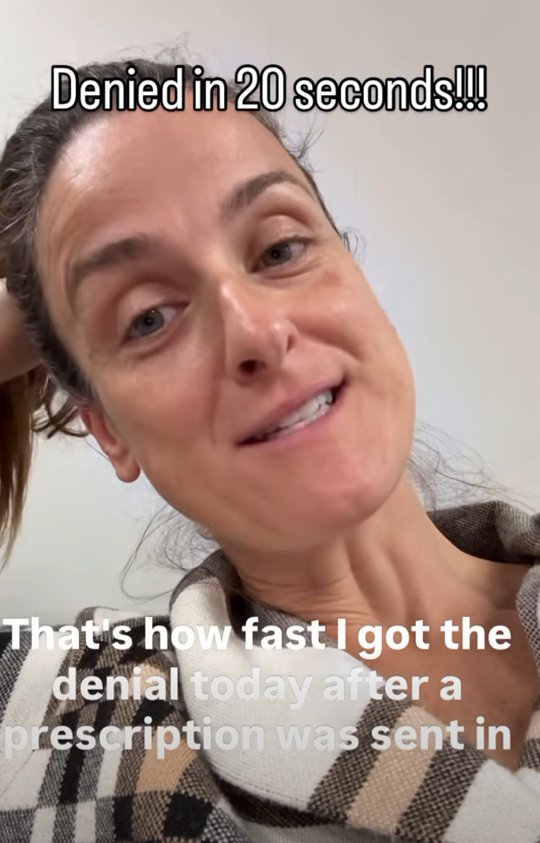
"Denied in 20 seconds!!!" — opens on Instagram.
"My request was denied in 20 seconds… That denial was not read by a person. That was denied by AI — and in the denial it says that a patient needed to try something that we had just documented that she tried and failed. So, it's happening. It's here. It's affecting your care. It's delaying your care. And it's driving up costs."
— Dr. Julie Militello
The Same Pattern, at Machine Speed
A denial that cites a requirement the record already satisfied — issued faster than a person could open the file. AbilityForge documents the algorithmic side of this on the Scienter page, including the nH Predict class action.
Section IV · Step Therapy
"You're Dictating Care. You're Not the Doctor."
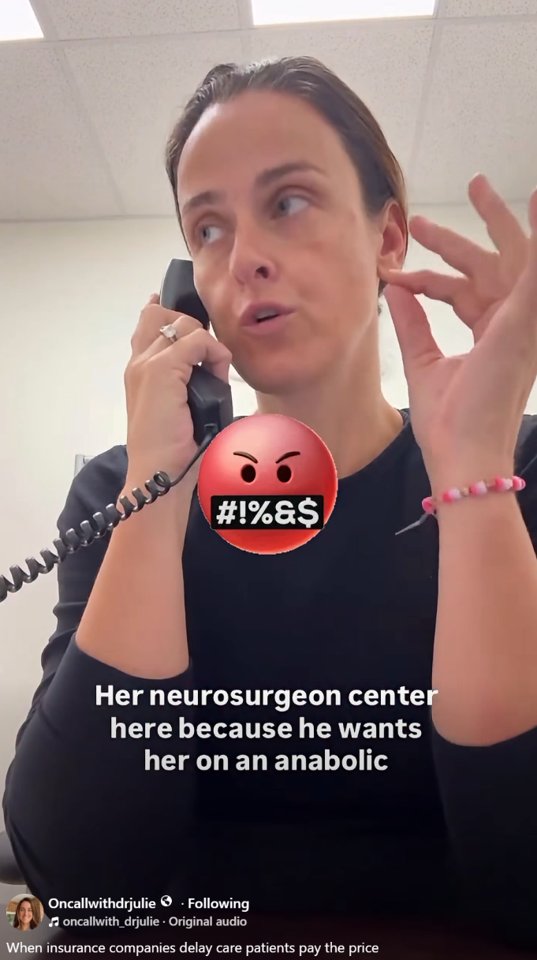
"When insurance companies delay care, patients pay the price" — opens on Instagram.
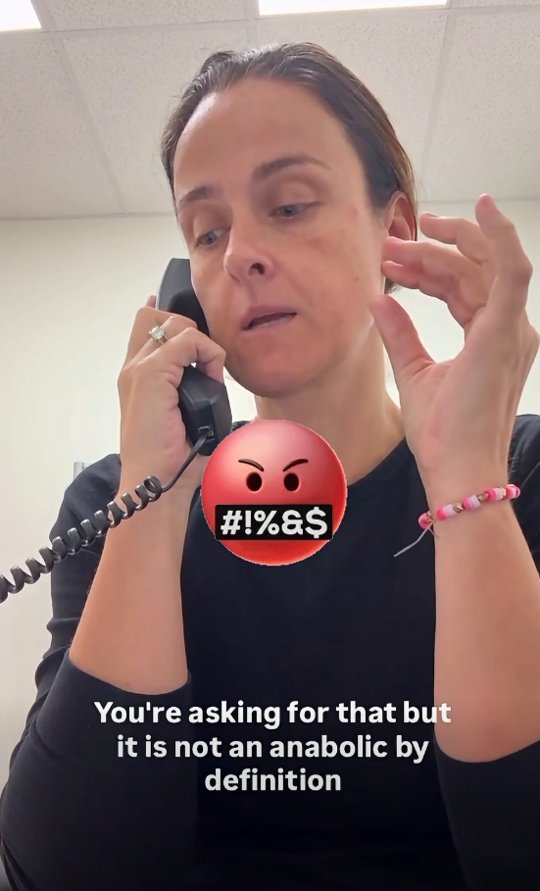
The same call, continued — opens on Facebook.
"The patient has severe osteoporosis. The L-spine fusion surgery is coming up. Neurosurgery wants her on something like Evenity because it improves surgical outcomes… You're saying that she needs to be on alendronate. You're dictating care. You're not the doctor… That medication takes years to work. We don't have that type of time."
— Dr. Julie Militello
Why the Drug Matters — Plain-Language Context
- The insurer's choice, alendronate, is a first-line pill that slows bone loss. It builds bone density slowly, over years.
- The surgery doesn't wait years. In a spinal fusion, screws and rods are anchored into the vertebrae. In severely osteoporotic bone, hardware can loosen or the fusion can fail.
- Evenity (romosozumab) builds new bone and slows breakdown at the same time — the reason a surgeon would want it in the months before a fusion.
- The bone-building alternatives, Forteo and Tymlos, are daily self-injections. Evenity is given monthly in the office. For a patient with severe needle phobia, that difference decides whether the treatment happens at all.
Context compiled by AbilityForge for readers; the clinical judgment is the treating physicians'.
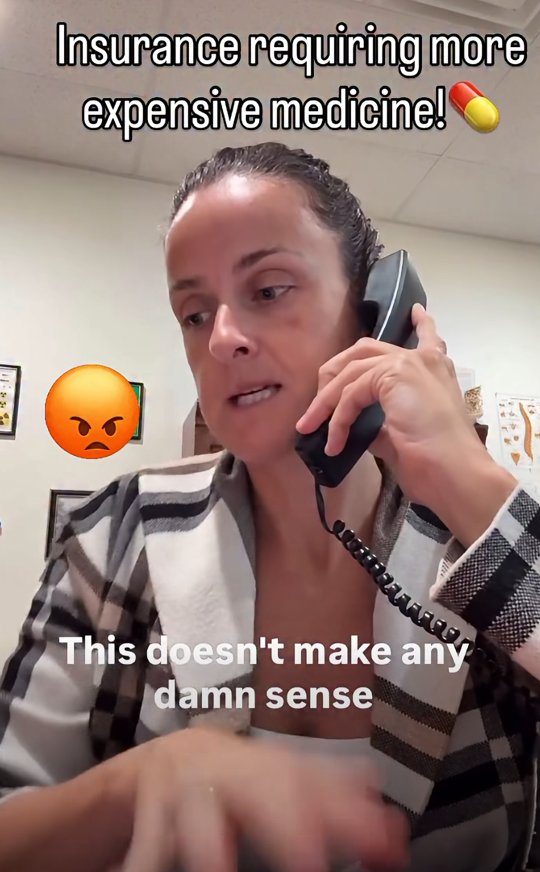
"Insurance requiring more expensive medicine!" — opens on Instagram.
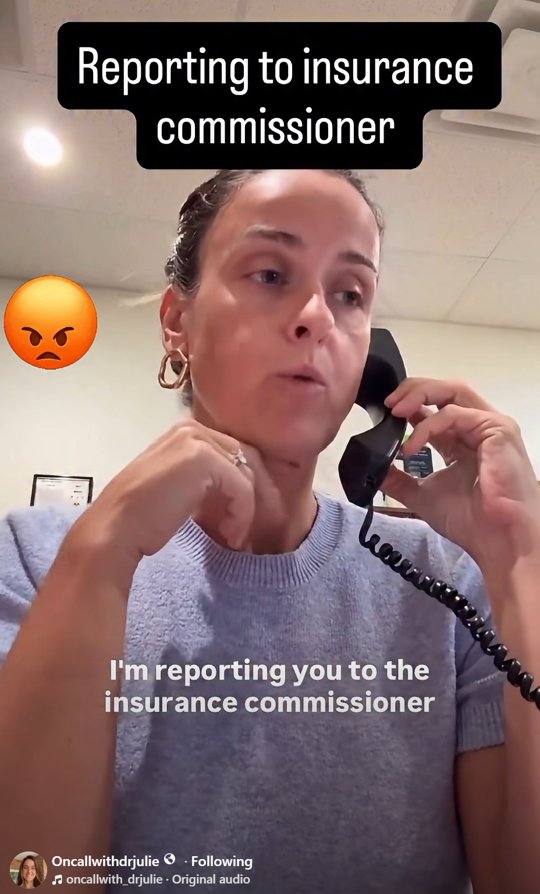
"I'm reporting you to the insurance commissioner" — opens on Instagram.
"You're requiring a medication that costs fifteen thousand dollars a month but denying a medication that costs a fraction of the cost… What incentive would you have to require medication that costs twice as much? Well, she's in pain now and she's living on samples, so what would you like me to tell her? I'm not telling her that."
"You're requiring a generic for a patient. The generic does not exist in this country… It is not available to Americans until April of 2028. Where would you like her to get this medication?"
— Dr. Julie Militello
Step Therapy, Upside Down
"Try the cheaper drug first" is the promise of step therapy. Dr. Julie documents its opposite: a required step that costs more, a required generic that doesn't exist yet, and a required first-line pill that can't work before the surgery date.
Section V · Vertical Integration
The Approval They Gave — and Then Asked Back
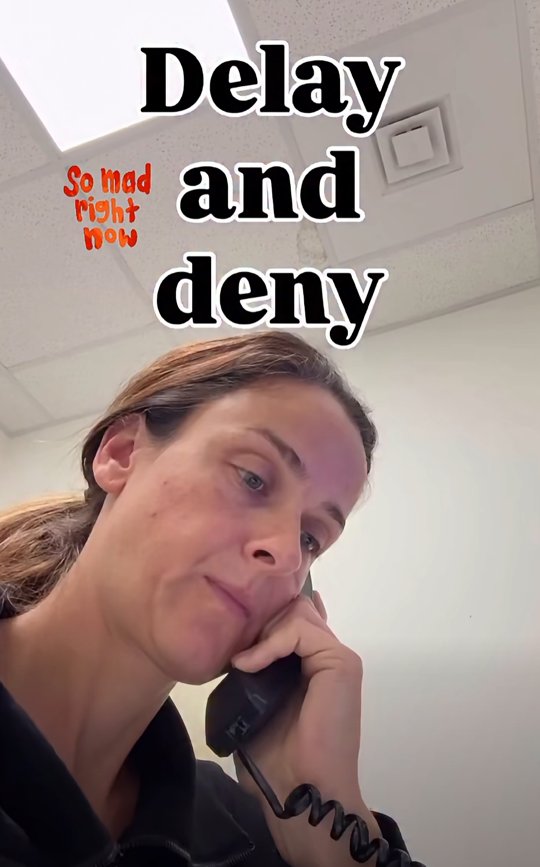
"Delay and deny — so mad right now" — opens on Instagram.
"Why are you telling her it's denied if I have the approval from you? … You're the insurance company AND the pharmacy. You're the one who gave me the approval. Why would I have to give it back to you? This is a delay tactic. The patient needs their medicine. They're on samples. … You're a multi-billion-dollar company and you're telling me you can't find it? Fine. I'll send it back to you."
— Dr. Julie Militello
One Company, Both Sides of the Counter
When the insurer and the pharmacy are the same company, "we can't find the approval" is a company losing its own paperwork. That is vertical integration from the exam-room side.
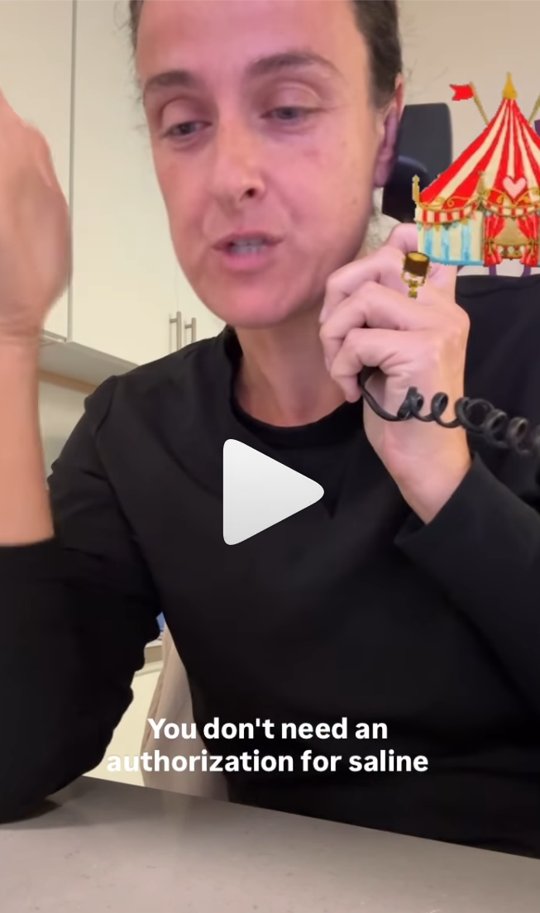
"You don't need an authorization for saline" — opens on Instagram.
"Now You're Just Making Things Up"
"You don't need an authorization for saline. It's literally salt water that the medication goes into… We have authorization for the drug. You approved her for the drug. You approved her for the infusion. Getting an authorization for the saline bag that it goes into is not a thing. I give infusions every single day. I have never heard of a more asinine reason to deny the infusion… Now you're just making things up. So now I bill it under a more specific code and you're having a problem with that too. Do you even hear what you're saying? This is insane. I'm getting penalized because I was using a more specific code for her lupus — and because I didn't get authorization for a saline bag that the medication goes into."
— Dr. Julie Militello. (She added the circus tent herself.)
The Pretext Denial
The drug was approved. The infusion was approved. The denial landed on the bag of salt water it's mixed in — and on her using a more precise diagnosis code. When the medical case can't be denied, an administrative one is found. The Framework's § 4 Administrative Cure Mandate is written for exactly this: no final denial on a paperwork pretext without a chance to fix it first.
Section VI · Coverage
Priced Out — Insured Today, Gone Tomorrow
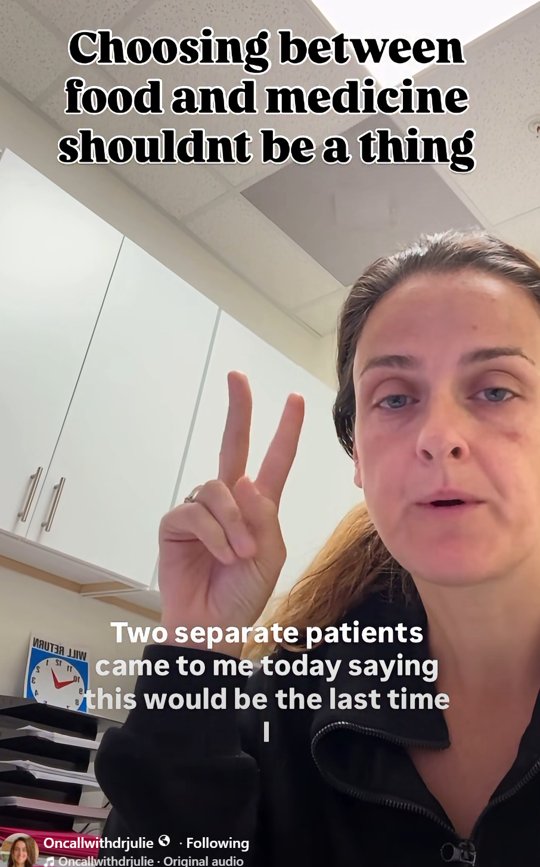
"Choosing between food and medicine shouldn't be a thing" — opens on Instagram.
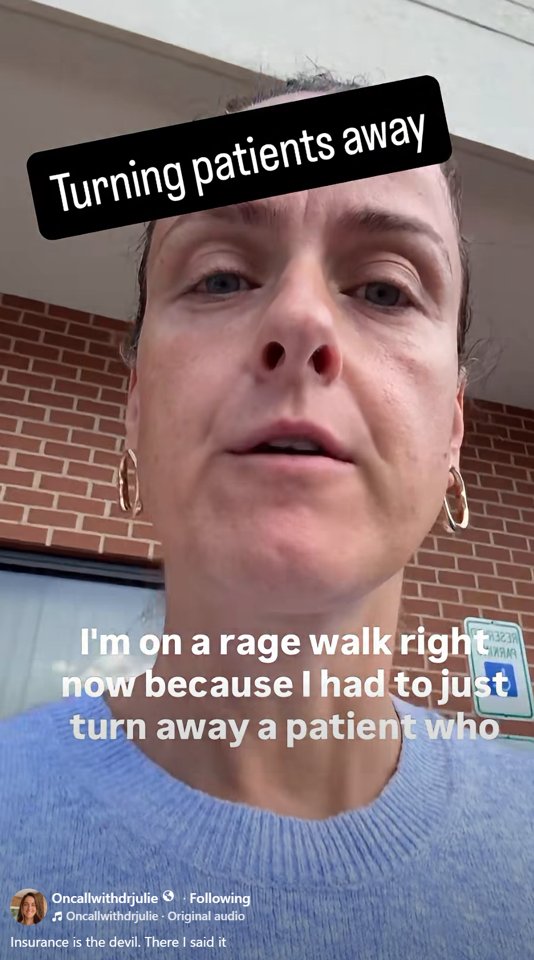
"Turning patients away" — opens on Instagram.
"Two separate patients came to me today saying this would be the last time I would see them because they no longer can afford health insurance and would not be able to come back to get their infusions… We're talking about MS drugs. We are talking about rheumatoid arthritis drugs. Medications that affect their activities of daily living."
"I had to just turn away a patient who is fully insured with a self-funded employer plan. But because his claims are too high, because medication costs so much, the employer decided: we're going to put authorizations on all your infusions. We're going to deny those authorizations and then we're going to drop you."
— Dr. Julie Militello
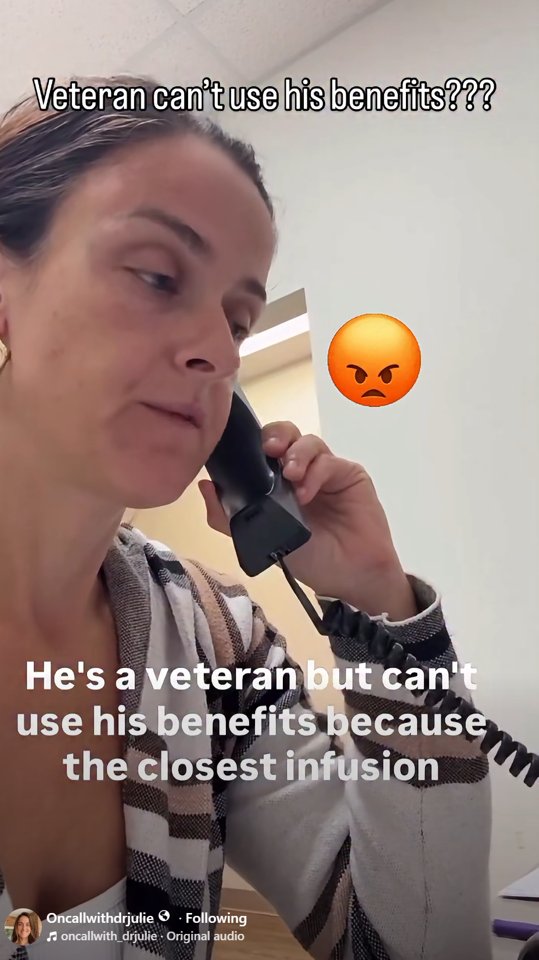
"Veteran can't use his benefits???" — opens on Instagram.
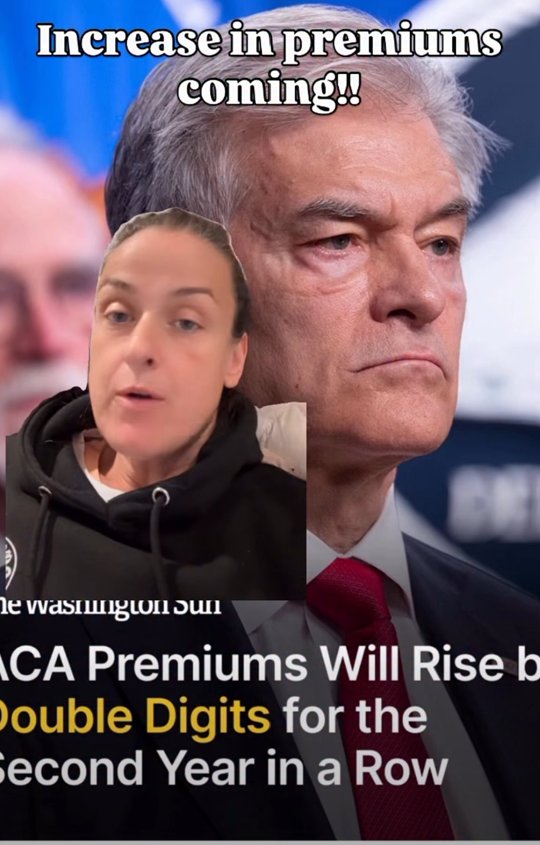
"Increase in premiums coming!!" — opens on Instagram.
"He's a veteran, but can't use his benefits because the closest infusion center for him is 80 miles away. How is he going to do that? He's 87 years old. I would be happy to infuse him here, but you're not allowing that to happen… This is the last person that we should be withholding care from."
By the VA's Own Yardstick
The VA's published community-care access standard for specialty care is a 60-minute average drive time. An 87-year-old veteran 80 miles from the nearest infusion center would appear to fall well outside it — the situation community care exists for. VA eligibility standards →
In her premiums video, Dr. Julie warns that Marketplace, employer and Medicare Advantage patients should all be ready for higher costs on January 1 — and in another, she simply asks: "Glad we have flying cars, but can we have affordable healthcare? Asking for a friend." Watch →
Section VII · Hope
Why She Keeps Going
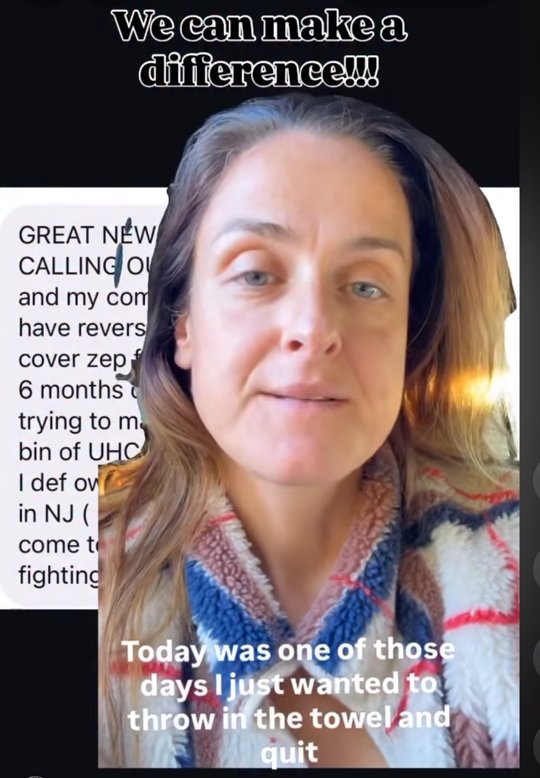
"We can make a difference!!!" — opens on Instagram.
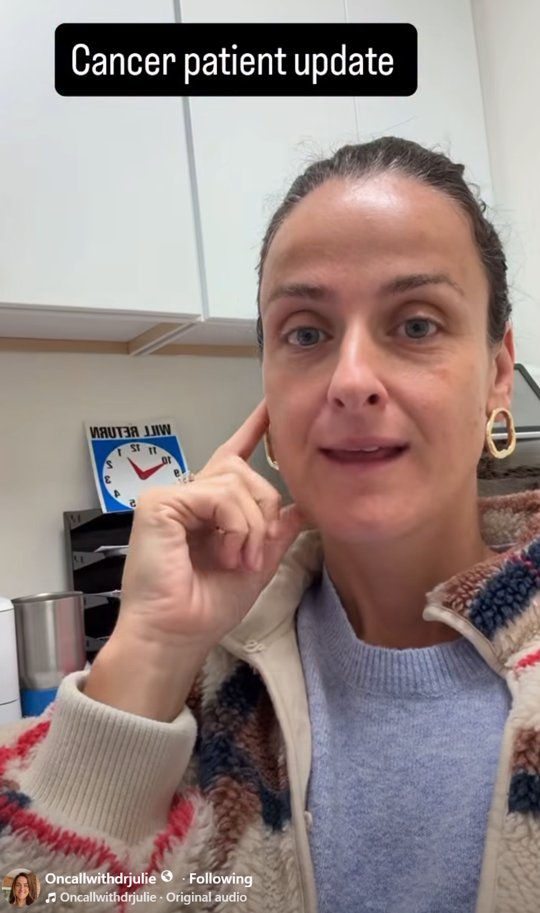
"Cancer patient update" — opens on Instagram.
"ADHD is a superpower" — opens on Instagram.
"Today was one of those days I just wanted to throw in the towel… until I got this message. This comment was everything I needed today to give me hope and keep going — that we can make a difference. We need more providers speaking out. We need more patients speaking out. And we can make a change."
The message was from a patient: after six months of fighting, her insurer reversed its denial — crediting Dr. Julie for calling the system out, and her own public comment tagging the insurer. In another update, a cancer patient got her drug anyway, "with absolutely no thanks to CareFirst or CVS Caremark" — through the manufacturer's free-drug program for patients under an income threshold.
And the energy behind all of it? She'll tell you herself: "I'm probably going to fail and then forget about it two minutes later and I'm just going to continue on. So, embrace this, don't try to suppress it."
Section VIII · Crossover
On the Call with Anna Harris, RN
Two AbilityForge allied voices, one conversation: Dr. Julie and nurse advocate Anna Harris, RN sat down together and took turns asking the questions.
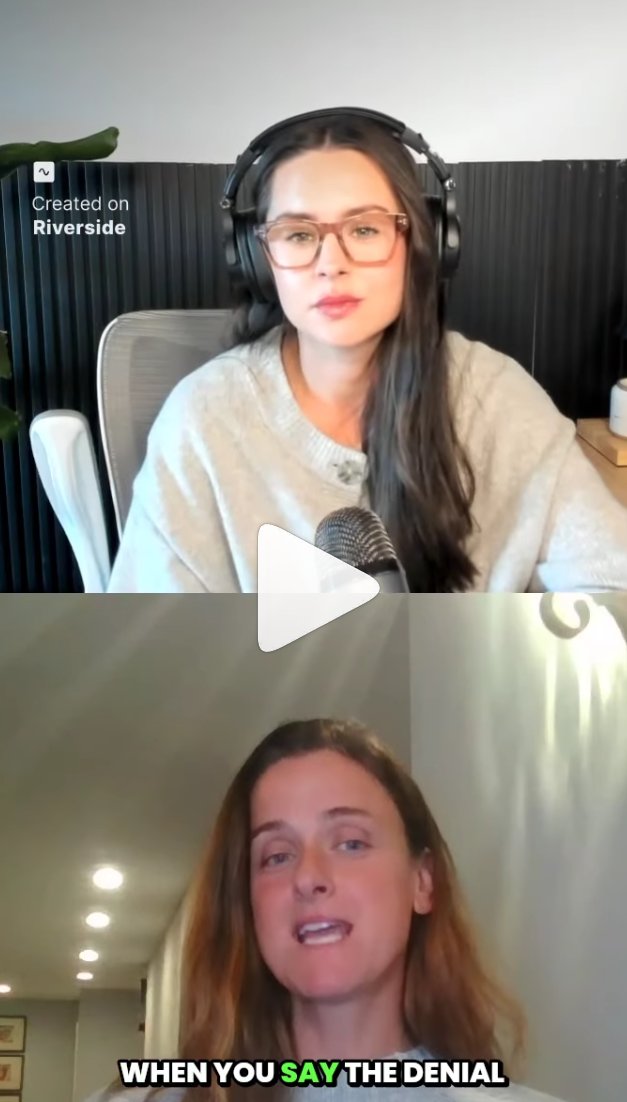
"The denial isn't a mistake" — opens on Instagram.
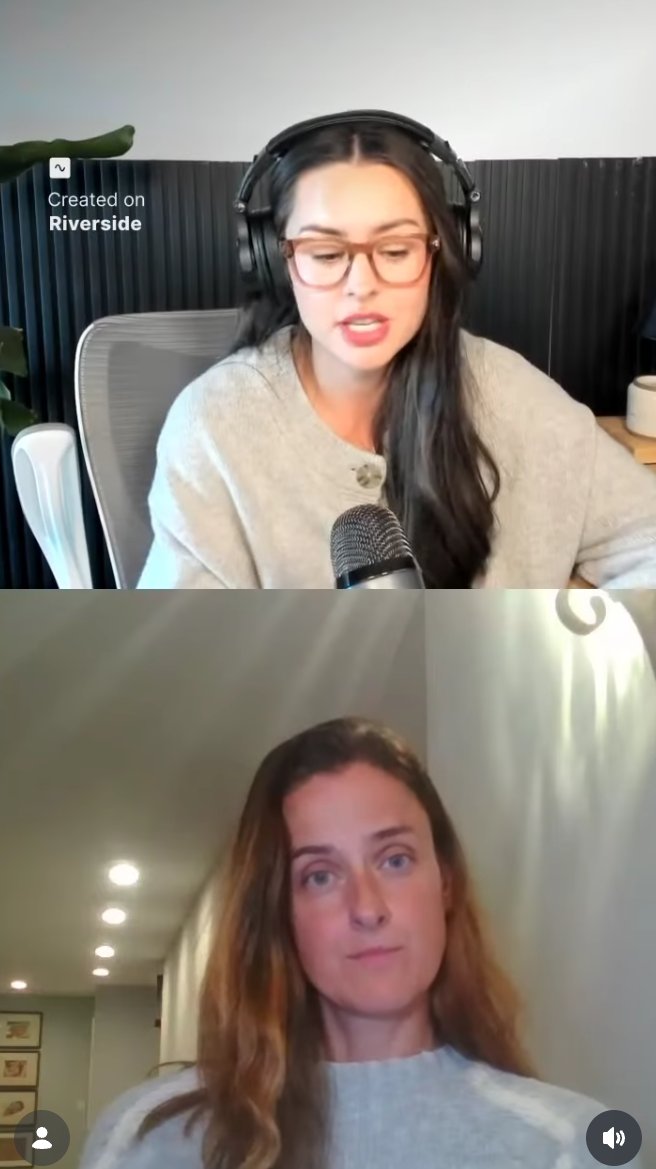
The Survivor Toolkit — opens on Instagram.
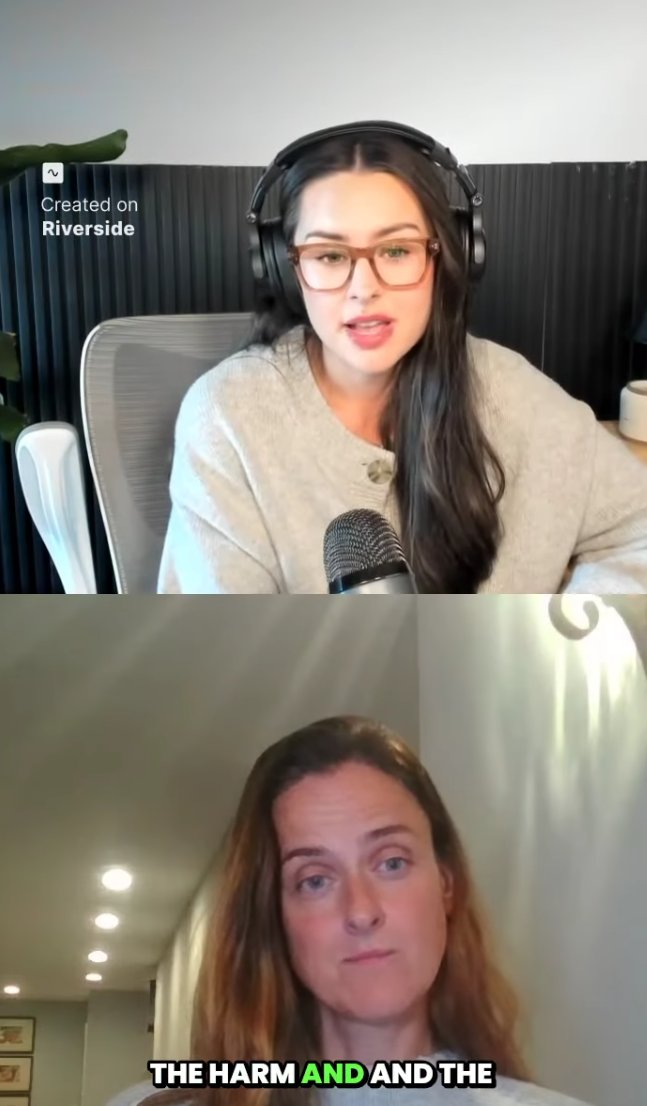
"A bill for being a victim" — opens on Instagram.

"Just access" — opens on Anna's Instagram.
The Denial Is the Business Model
Dr. Julie: "When you say the denial isn't a mistake, it's a business model — what do you mean by that?"
"There's a statistic out there that Medicare Advantage denied, I think, 4.1 million prior authorizations in 2024, and only about one in nine of those denials were ever appealed. So what that means is, people are not appealing it when they get a denial. They're just saying, 'Oh, this is the answer. I can't get my healthcare.' But when people did appeal, over eighty percent of them won. They were overturned. And so the business model is: the insurance companies KNOW this. They know that they win because people are not appealing in the first place. And so if they build that denial into the process, the chances are, over 80% of the time, they're gonna come out without having to pay for whatever that care is."
— Anna Harris, RN
Checking the Numbers
Her figures match KFF's analysis of 2024 Medicare Advantage data: about 4.1 million prior-authorization denials, 11.5% of them appealed, and 80.7% of appeals overturned in full or in part. One precision worth adding — those reversals came on the plan's own reconsideration, not from an outside reviewer. Which sharpens her point: the insurer reversed itself eight times out of ten the moment someone asked. Denial rates by insurer →
"Just Access"
Anna: "Do you think much of these processes that we have built in our healthcare system today contribute to chronic disease in the United States?"
"All the barriers in place — and not just prior auths, not just denials and appeals, but access alone? I would say a tremendous amount. From diseases such as hypertension, to diabetes, to cancers. Just access, where cost is so prohibitive… We should be having the best healthcare in the world, considering how much we spend on it. We're just not seeing that. And I think transparency is a big issue there. If a patient needs to be seen, I am very transparent about the prices. But if you go to an imaging place, for example, and you have insurance — you get your bill, and this has happened to me recently — wait, that's not how much it costs, because if it was self-pay, I would be paying less. Like, what happened there? And even the self-pay prices are just — that's not really how much it costs. So you are putting another layer of barriers there."
— Dr. Julie Militello
The Survivor Toolkit
Anna built a step-by-step guide for sexual assault survivors who were billed for an exam they shouldn't have to pay for: filter your federal rights, then your state, and find who to call and whether your state has a program that covers it. "But the fact that you have to do that at all…" — "It's mind-blowing," Dr. Julie answers.
Dr. Julie's caption on the clip: "WHAT DO YOU MEAN?? Sexual assault victims are billed and sometimes sent to collections for the care they have received in the ER??"
"I've just been so honored and just taken aback — and also disgusted — with what they've had to go through: in addition to the harm, and the trauma of going through something that horrific, then to be re-reminded over and over again with a bill for being a victim. And that, I think, is telling of the way our system is built, right? Because I've gotten other messages saying things like, that's exactly how we do it if you were in a car accident, or if you were shot, or if you were a victim of a stabbing. And in all of those cases, it's still absurd to me that we're billing for their care. But also victims who are already in sexual assault situations — already terrified, and most of the time not reporting it."
— Anna Harris, RN
Get the Survivor Billing Toolkit on Anna's Billing page →
These clips are co-posted by Dr. Julie and @whatdoyoumean_pod on Instagram.
Section IX
Follow Her Work
A Note on This Feature
Dr. Julie Militello's content is her own; AbilityForge features it as an allied voice, with her permission, and neither controls nor hosts her videos. Quotations are transcribed from her videos (and, in Section VIII, Anna Harris's), with drug names standardized for spelling. Clinical context boxes are written by AbilityForge for general readers and are not medical advice; treatment decisions belong to patients and their physicians.