PBM Formulary Drop — Fatal Outcome
Cole William Schmidtknecht
Born La Crosse, WI · Lived Appleton, WI · Optum Rx (UnitedHealthUnited HealthcareThe largest health insurer in the United States by revenue. UnitedHealth Group operates two primary business segments: UnitedHealthcare (health insurance) and Optum (pharmacy care… Group subsidiary) · Walgreens, Appleton WI
March 18, 2001 — January 21, 2024
Press-Covered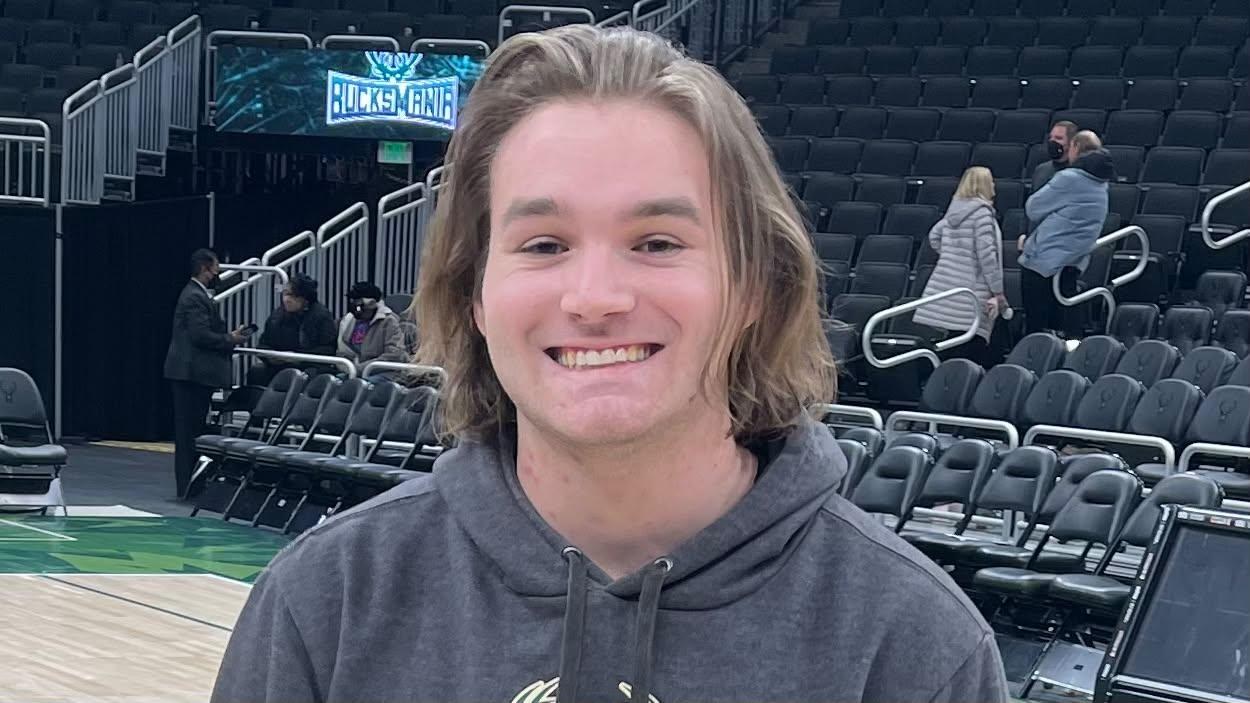
Cole had insurance. At the pharmacy counter he learned his inhaler was no longer covered: $66 had become $539. His family says no notice came first and no alternative was offered. He was 22, living independently, and paying his own bills. He chose rent. He died nine days later.
Who Cole Was
Cole Schmidtknecht was 22 years old, living on his own with his childhood best friend in Appleton, Wisconsin, working full-time, and — by his family's account — finally finding his footing. He'd been diagnosed with asthma as an infant and had navigated years of additional challenges: poor eyesight, ADD, academic struggles, severe depression, and a serious knee injury after high school. But in the period leading up to January 2024, he was doing well. He was independent. He was on a positive trajectory.
His parents called him "Mr. Independent." As a toddler he walked himself into kindergarten. He "always stood up for the little guy." He played in video game tournaments and built a following on Twitch that he shared with his gaming friends. His mother, Shanon, said he had "a lifelong curiosity for knowledge." He loved elephants for their wisdom and kindness, and wanted one tattooed on his arm.
He had been managing his asthma daily with an Advair Diskus inhaler — a medication his insurance had been covering for between $35 and $66.86 per month. He had insurance. He was a compliant, medically engaged patient with a documented chronic condition that required daily maintenance medication to stay alive.
What Happened
The Formulary Drop
Cole goes to a Walgreens in Appleton to pick up his Advair Diskus refill. A pharmacist tells him his medication is no longer covered by his insurance. Without coverage, the out-of-pocket cost is $539.19 — a 700% increase from what he had been paying. He leaves without a generic or an alternative. The lawsuit alleges Optum Rx never gave him the 30 days' notice required before a coverage change.
The refill request went in on January 10. The family later obtained the pharmacy's video footage, which shows Cole at the counter on January 12. Early news reports gave January 10 as the pharmacy date.
The Choice
Cole leaves the pharmacy without his medication. He chooses to pay rent. He is 22 years old, living independently, responsible for his own bills. The choice is not reckless — it is the choice a 22-year-old who has always had insurance coverage for a medication makes when that coverage disappears overnight without warning or transition plan. He had no reason to believe the next few days would be different from any other.
Severe Asthma Attack
Cole suffers a severe asthma attack — three days after leaving the pharmacy without his medication. He goes into cardiac arrest. His roommate drives him to ThedaCare Regional Medical Center–Appleton; he is unresponsive on arrival. He is placed on a ventilator in the ICU.
Cole Dies
Cole Schmidtknecht dies at age 22, after his parents withdraw life support — six days after the asthma attack, nine days after he stood at a Walgreens counter and found out his insurance no longer covered the medication he needed to breathe. His 23rd birthday was eight weeks away.
Who Is Responsible — and Why This Case Is Different
Every other fatal case in the Reason Room involves a prior authorization denial — a doctor orders treatment, an insurer says no, a patient deteriorates while fighting the bureaucracy. Cole's case is different. Nobody denied his doctor's order. Nobody said the medication wasn't medically necessary. A Pharmacy Benefit Manager removed his medication from the formulary — the list of drugs an insurer will cover — and the price went from affordable to impossible overnight, with — his family alleges — no warning and no alternative pathway offered.
This is the PBM vertical integrationVertical IntegrationA corporate structure in which a single entity owns multiple layers of the healthcare delivery chain — insurer, pharmacy benefit manager, pharmacy, and physician group — creating s… problem in its most direct and lethal form. Optum Rx — a subsidiary of UnitedHealth Group, the parent of UnitedHealthcare — controls what drugs are covered, at what cost, and with what alternatives. Those decisions are made without physician input, without patient notification timelines, and without any obligation to provide a clinical bridge when a life-sustaining medication is dropped from coverage.
Optum Rx — The PBM
One of three PBMs that collectively control approximately 80% of all U.S. prescription drug volume. A subsidiary of UnitedHealth Group. Decides which drugs appear on formularies, which tier they're placed in (which determines patient cost), and which generics or step-therapy alternatives are available. Cole's parents allege the 700% price increase in Advair Diskus — from ~$66 to $539 — resulted from Optum Rx's formulary decision. Optum Rx's position: in a statement, it said the Walgreens pharmacist was obligated to contact Cole's prescriber about three other "clinically-appropriate" alternatives. By its own account, cheaper options existed. Cole left without any of them.
Walgreens — The Pharmacy
The lawsuit alleges that when the pharmacist at the Appleton Walgreens told Cole his medication was no longer covered, no generic alternative was offered and no step therapyStep TherapyAlso called 'fail first.' An insurer requirement that patients try cheaper or less effective treatments before the clinically indicated option will be authorized — even when the tr… pathway was identified. The lawsuit alleges Walgreens had a duty — as the dispensing pharmacy — to inform Cole of available alternatives, assist with alternative coverage options, or escalate to his prescriber. Walgreens declined to comment, citing pending litigation.
The Vertical Integration Problem
Cole's case illustrates exactly what S.3822 — the Break Up Big Medicine Act — is designed to address. UnitedHealth Group owns both the insurer (UnitedHealthcare) and the PBM (Optum Rx) that made the formulary decision that removed his coverage. There is no independent check on that decision. The company that pays the claim is the same company that decides which claims get paid — and at what price. The Break Up Big Medicine Act would prohibit this simultaneous ownership. Cole's case is the human costHuman CostThe aggregate framework for documenting what wrongful denial actually produces — not claim statistics or appeal rates, but life outcomes. of the structure the bill would dismantle.
The Lawsuit
Cole's parents, Shanon and Bil Schmidtknecht of Poynette, Wisconsin, have filed a federal wrongful deathDeaththe act of dying; the end of life; the total and permanent cessation of all the vital functions of an organism. lawsuit against Optum Rx and Walgreens, alleging the 700% price increase directly caused their son's death. They allege the coverage change was driven by manufacturer rebates rather than clinical judgment, and that Optum Rx failed to give the notice state law requires.
August 2025 — The Case Survives
Optum Rx moved to dismiss, arguing federal law (ERISA) shields it. A federal judge in the Eastern District of Wisconsin denied the motion: "A wrongful death claim based on the theory that a PBM should have provided an insured notice of a change in prescription coverage is not necessarily preempted by ERISA." The case continues.
Shanon Schmidtknecht, et al. v. Optum Rx, Inc., et al., No. 25-CV-93 (E.D. Wis.)
The family is represented by attorney Michael Trunk. "It's going to be a battle for sure," he said when the suit was filed. On NewsNation, he said other families have reached out to him since.
Since Cole's death, his family has become advocates for PBM reformPBM ReformPharmacy Benefit Manager reform. PBMs act as intermediaries between drug manufacturers, insurers, and pharmacies.. His father Bil — who goes by @angrydadwi on social media — has been working with legislators across the country and traveling to Washington, D.C. to push for accountability. The family operates through Patient Protector, an advocacy organization built around Cole's story and the broader PBM accountability fight, along with the Modern Medical Mafia docu-series and the Patient Protector Network.
Their full profile in the Remedy Room — Patient Protector Network →Last Week Tonight with John Oliver · September 2026
In a segment on UnitedHealth Group, John Oliver closed with OptumRx and Cole's case:
"That is an absolute tragedy and it was completely preventable. This is the richest country in the history of the world, and yet for some reason our current health system still forces people to walk away from medicine that will literally keep them alive because they can't f***ing afford it."
Watch the clip →In Congress and the Statehouse
On December 4, 2024, Rep. Jake Auchincloss (D-MA) honored Cole on the House floor, with Bil and Shanon in the chamber, and called on Congress to pass H.R. 9096, the bipartisan Pharmacists Fight Back Act. "Cole's death was preventable," he said. H.R. 9096 expired with that Congress; the Pharmacists Fight Back Act was reintroduced in the 119th Congress on December 11, 2025, as H.R. 6609 and H.R. 6610.
In Wisconsin, Cole's Act (SB 203 / AB 173), sponsored by Senate President Mary Felzkowski and Rep. Todd Novak, both Republicans, would stop PBMs from changing a drug's coverage without warning, along with other protections for patients and independent pharmacies. It passed the Senate health committee unanimously in August 2025, with support from Democrats including Sen. Kelda Roys, but did not become law before the session ended. The family is pushing to pass it in 2027.
Cole's family's summary of PBMs: "Pharmacy Benefit Managers, while originally created to streamline the administrative burden of processing prescription claims, have now become a modern day mafia. They're vertically integrated with every other element of the prescription supply chain: health insurance companies; pharmacies; wholesalers; and even now quasi-manufacturing."
— Patient Protector, patientprotector.us/meet-cole
What Cole's Case Adds to the Record
The other cases in the Reason Room demonstrate what prior authorization denial does to patients who need treatment. Cole's case demonstrates what happens when the financial architecture of the system makes life-sustaining maintenance medication unreachable — not through a clinical decision, but through a business decision made without notification, without physician involvement, and without any obligation to provide an alternative.
Cole was not denied care. He was priced out of it. His insurance covered his inhaler — until the morning it didn't. The formulary change happened in the background of a system the patient has no visibility into and no recourse against. By the time he found out at the pharmacy counter, the coverage was already gone.
He was 22. He had insurance. He was responsible — he showed up to pick up his medication. The system failed him in the nine days between January 12 and January 21, 2024. That failure has a name and an address: it lives at the intersection of PBM formulary control, vertical integration, and notice that, his family alleges, never came.
What Cole Would Want You to Know
Do what makes you happy.
Let your true heart show.
Be kind. Say thank you.
Let your good light glow.
That's what Cole would want you to know.
From the song his family released on March 18, 2026 — what would have been his 25th birthday.
Listen →Sources
Has this happened to you?
Every documented case adds to the evidentiary record. Your story matters.